
Last updated November 15, 2026
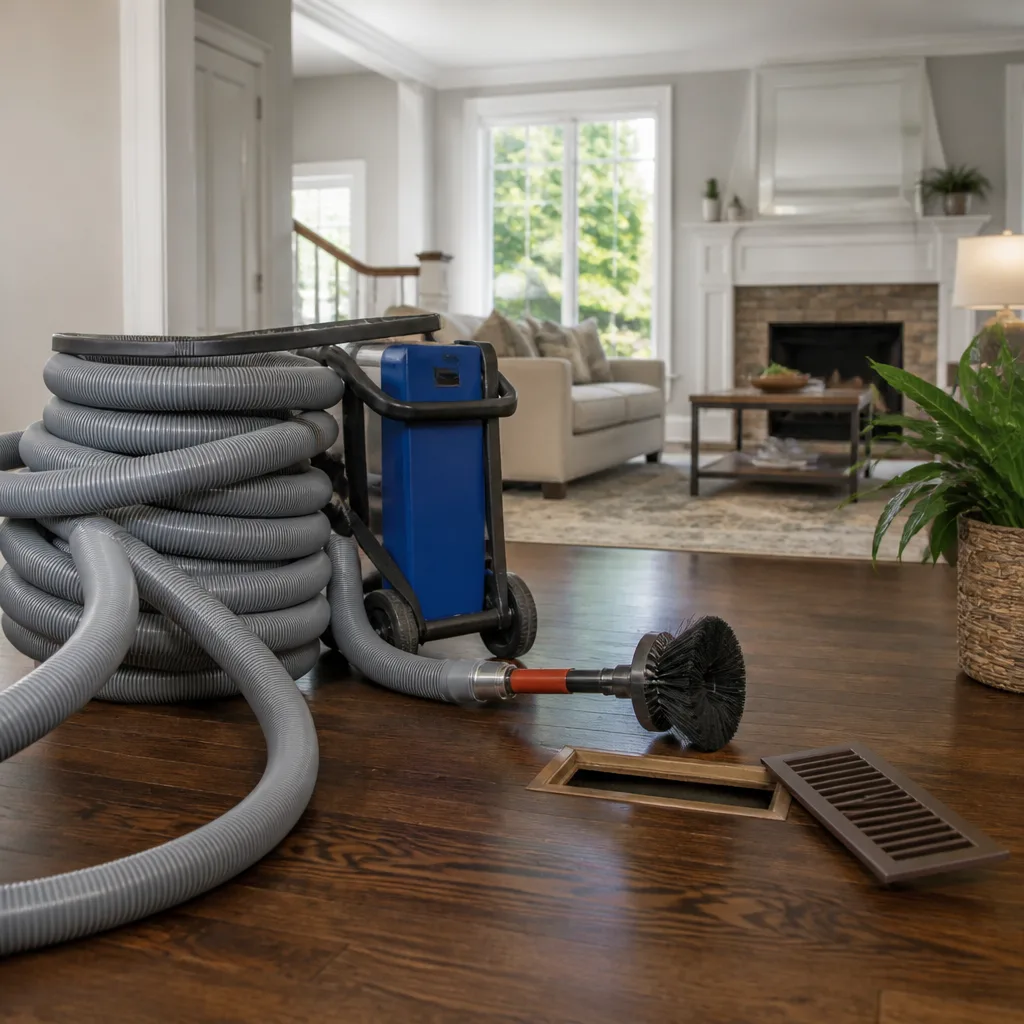 Whole-home duct cleaning
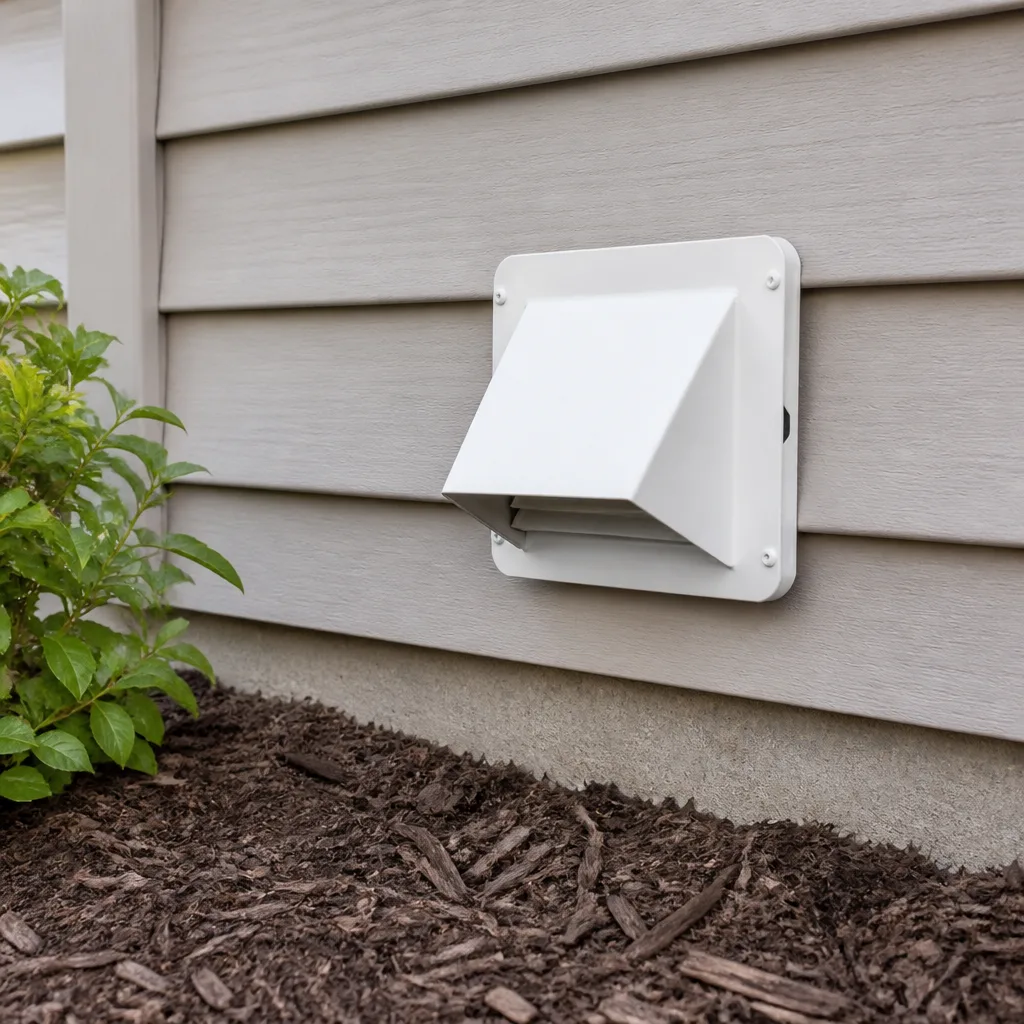 Dryer vent cleaning
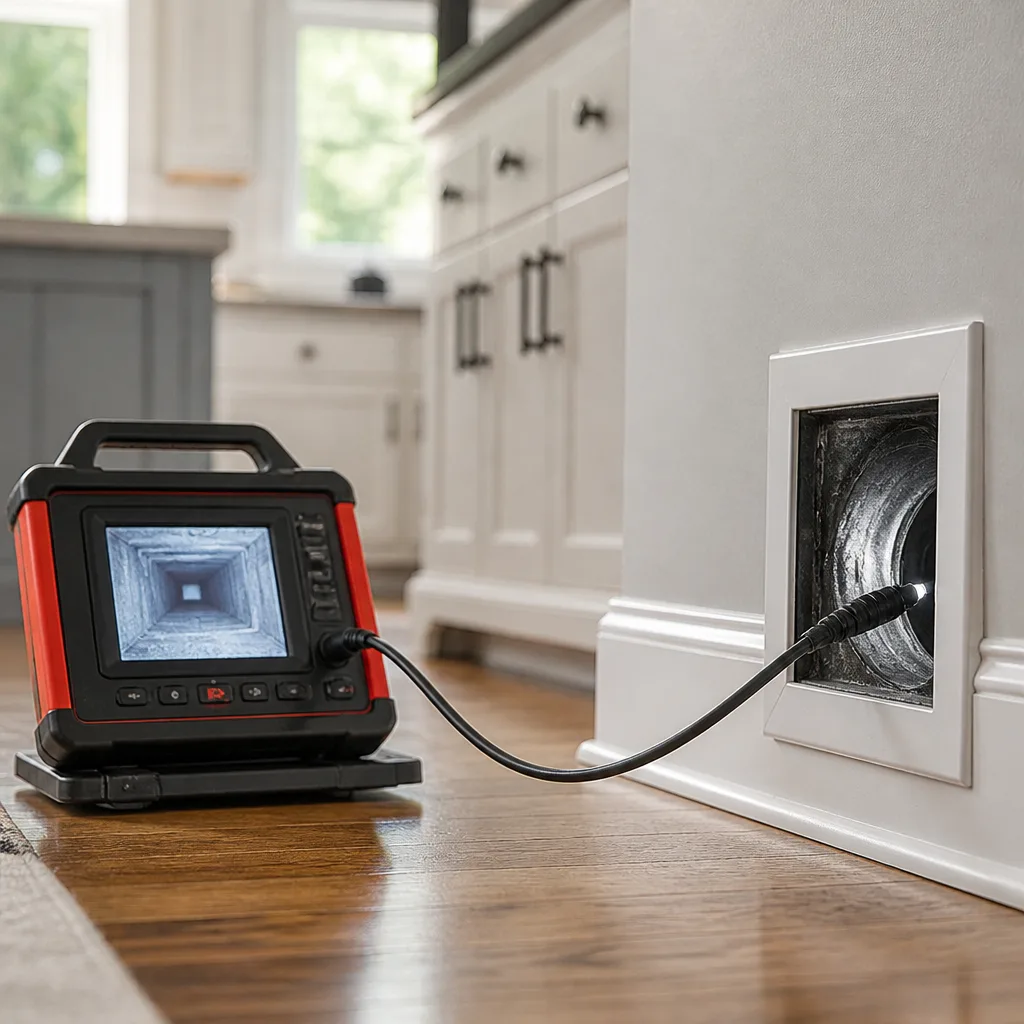 Camera inspection
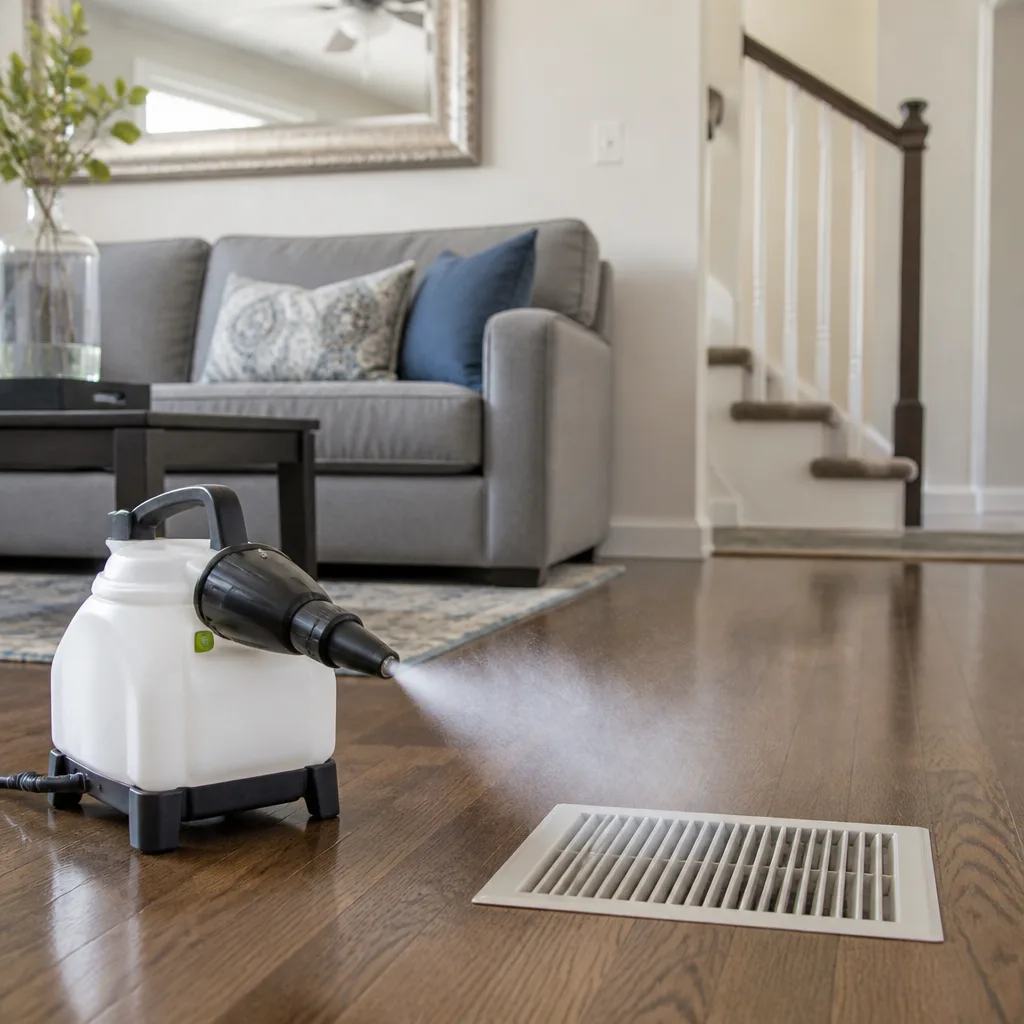 Sanitizing & deodorizing
Whole-system duct and dryer vent check with before-and-after photos - you see exactly what came out of your vents
That "$99 whole-house special" is a bait ad - the real number appears once they are in your hallway, or the "clean" is a shop-vac at the register. We photograph the inside of your ducts before and after instead.
Air Duct Cleaning Maintenance Schedule: What to Do and When
The most repeated piece of advice in this trade is to clean your ducts every three to five years. That number comes from federal guidance written well before California’s post-2017 wildfire smoke seasons changed what North Bay homes actually pull through their return grilles each summer and fall. A fixed calendar interval treats a brand-new build with no pets the same as a 1970s slab-on-grade rancher that sat through two smoke events last autumn. They don’t carry the same load. This guide gives you a schedule built around your house’s real risk profile, what you can inspect yourself at each seasonal change, and when a Santa Rosa homeowner should call for a camera scope instead of waiting it out.
Quick Answer
If you want one rule: have your ducts cleaned every three to five years in normal conditions, drop to every two to three years if your Santa Rosa home was built before 1990, has pets, or sits through regular wildfire smoke seasons, and treat an immediate inspection as necessary after any evacuation-level smoke event or if you see visible debris at the registers. Filters, not calendars, do most of the maintenance work in between. The right MERV rating changed on schedule protects your ducts far more than a rigid cleaning date.
Styles & brands we work with
- Whole-home duct cleaning
- Dryer vent cleaning
- Camera inspection
- Sanitizing & deodorizing
Table of Contents
- Why the Standard 3 – 5 Year Interval Falls Short Here
- Your Home’s Risk Tier: Low, Moderate, or High
- What to Inspect at Every Seasonal HVAC Change
- Using Santa Rosa AQI History to Time a Mid-Cycle Inspection
- Filter Maintenance as Your First Line of Duct Defense
- What Needs a Camera Scope vs. What You Can See
- Post-Cleaning Benchmarks Worth Asking For
- The Full Twelve-Month Schedule, Start to Finish
Why the Standard 3 – 5 Year Interval Falls Short Here
The three-to-five-year figure assumes a fairly stable indoor particulate load. In Santa Rosa, that assumption stopped holding several years ago. The region’s wildfire smoke seasons now push fine particulate into homes through return air, gaps around filter slots, and the duct system itself during long stretches when windows stay shut and the HVAC keeps running. A house on the west side of town near the Laguna can take in a very different particle load in a smoke-heavy August than a newer build in Fountaingrove with a tighter envelope and a properly sealed filter door.
Attic temperature swings compound the problem. Ducts run through unconditioned attic space in most single-story Santa Rosa homes, and the liner inside those ducts cycles through heat expansion and cooling contraction for months at a time. That cycling is what breaks down internal insulation over the years, and a liner that starts to degrade becomes a surface that traps debris instead of releasing it. That’s the piece a calendar can’t account for.
Construction era matters just as much. Pre-1990s homes in Santa Rosa often have duct systems sized and installed with materials and sealing standards that have long since given up. Rigid metal with taped seams or old flex with loose connections can leak conditioned air into the attic and pull unfiltered attic air back into the return. If that’s happening, you’re not just dealing with a dusty duct; you’re dealing with a duct system that’s actively importing contaminants.
So the useful question isn’t “when did we last clean them.” It’s what’s my house’s exposure profile, and what does the inside of the duct look like. The next sections build that answer into tiers, seasonal checkpoints, and filter decisions.
Your Home’s Risk Tier: Low, Moderate, or High
We use a simple three-tier framework to set a cleaning interval. Look at your home through each tier and pick the closest fit. Most homes land squarely in one tier; a few will straddle two, and in that case use the higher interval.
Low risk. Homes built in the last fifteen to twenty years, no pets, no smokers, well-sealed filter slot, and climate control that runs on a reasonable schedule. Duct contamination in this tier grows slowly. A cleaning every five years, paired with disciplined filter changes, usually keeps things in good shape. If you’re in a newer build near Coffey Park and you’ve never had a smoke event sit over you for a week, this is your tier.
Moderate risk. This is the biggest bucket in Santa Rosa. Homes built before about 1990, one or two pets, occupants who keep the windows open much of the year, and one or more AQI events that reached the “unhealthy” range during the last smoke season. Here we usually talk about a three-year interval, with a camera inspection at the eighteen-month mark.
High risk. Homes that were under an evacuation warning or order during a major fire, homes with immunocompromised or respiratory-sensitive occupants, homes with a history of visible moisture or microbial growth in the HVAC system, and homes with pets that shed heavily or a smoker indoors. For this tier, clean on the front end and reassess at the one-year mark rather than working from a multi-year plan.
- Low risk: clean every 5 years, filter on schedule
- Moderate risk: clean every 3 years, camera scope at 18 months
- High risk: clean, then re-inspect at 12 months
- Any tier: clean immediately after a major smoke event or visible debris event
These are baselines, not mandates. A clean system looks different from a contaminated one under a scope, and that’s what should drive the actual decision to clean. We can work with your HVAC records either way.
What to Inspect at Every Seasonal HVAC Change
Twice a year, at the switch from heating to cooling and back, you can run a useful five-minute inspection yourself. None of it requires tools. All of it tells you something real about the state of the duct system.
- Pull a return grille and look at the filter. Note the color and the amount of dust trapped on the upstream face. A filter that’s uniformly gray and matte is working. A filter with a single heavy deposit in one corner suggests bypass or a duct leak pulling attic air.
- Check the grille itself. Black smudges around the perimeter of the frame mean air is leaking past the filter (bypass). That’s air bypassing your filter and going straight into the blower, which loads the ducts faster than usual.
- Look at the filter slot edges. Run your finger along the slot. If you pick up a heavy grit line, the filter is too small, sitting crooked, or the slot frame is damaged.
- Inspect the condensate pan under the air handler (cooling season). Standing water, a rust line, or a scum ring signals moisture near the coil, which is a duct-cleaning-and-inspection trigger, not something to put off.
- Check the supply registers for even airflow. Weak airflow at one register in the same zone as a strong one suggests a duct problem farther back, not a vent problem.
Do these checks at the first hot week in spring and again as the first cool nights arrive in fall. Write the date and what you saw in a note. When you eventually call a technician, that record becomes a real baseline instead of a guess. In our experience, homeowners who keep those notes get quoted more accurately and get more useful recommendations because the technician knows what changed.
Using Santa Rosa AQI History to Time a Mid-Cycle Inspection
Waiting for a fixed cleaning date means you could miss a smoke event entirely. During the last few seasons, Santa Rosa has logged air quality readings in the “unhealthy for sensitive groups” and worse range on multiple days each summer and fall. Those readings measure outdoor air, but the reading matters indoors because it tells you how much particulate your filter and ducts were trying to catch.
Here’s what to do with that data. First, follow your local AQI readings through smoke season. If a stretch of days over a week reached “unhealthy” levels while your system ran with windows shut, log it. Second, if you accumulate three or more moderate-to-severe smoke episodes within a twelve-month period, bring your next inspection forward by about a year rather than waiting for the fixed date.
Third, and this is the one people skip, change the filter as soon as the smoke event ends, not on the next scheduled reminder. A filter that’s captured a week of outdoor smoke is loaded. Leaving it in place forces the blower to work harder and increases the chance of pulling air through any weak spots in the duct system.
- One short smoke episode: change the filter on schedule and note the date.
- A week or more of sustained smoke: change the filter immediately, schedule the next inspection.
- Evacuation-level event or visible ash fall in your yard: change the filter, bring the inspection forward, and consider a camera scope if the ducts are more than three years old.
- Two or more such events in the same season: treat that as a trigger for a full cleaning interval reset.
For more detail on how the cleaning itself works, the air duct cleaning service page covers equipment and process. The point here is timing. Set your inspection by what the air did, not by what the calendar says.
Filter Maintenance as Your First Line of Duct Defense
Filters protect ducts. That single sentence drives everything else in a maintenance schedule. A duct without a properly sized filter is a duct that collects whatever the return air carries.
The trap most homeowners fall into is buying the highest MERV rating on the shelf. Higher MERV captures finer particles, but a filter rated too high for your system’s airflow can starve the blower and put extra strain on the motor and coil. The sweet spot for most residential systems is MERV 8 to MERV 11. That rating captures the bulk of particulate that loads ducts while keeping static pressure in a workable range for a typical residential air handler.
If someone in the home has significant respiratory sensitivity and you’re considering a MERV 13 filter, get the system’s static pressure checked first. High-MERV filters can work, but the blower needs to handle them, and many older residential systems can’t. The wrong answer isn’t a more expensive filter; it’s a filter that fits the system.
On change frequency: every three months in normal conditions, monthly during an active smoke season, and sooner if you have shedding pets or run the system hard. Write the install date on the filter frame with a marker. It’s the fastest way to keep the schedule honest.
When a filter slot is badly sealed or bypassing, the fix isn’t a different filter; it’s a filter upgrade. We work with Honeywell and Aprilaire filter cabinets and media systems that seal properly and give you a known MERV rating in a frame that fits your air handler. That upgrade is sometimes the single most useful duct maintenance step a Santa Rosa homeowner can take between cleanings.
What Needs a Camera Scope vs. What You Can See
Some duct conditions reveal themselves at the register. Others stay hidden until a technician runs a camera through the system. Knowing the difference tells you when a phone call is worth making.
Things you can see yourself: grille smudges, filter bypass, filter slot grit, standing water in the condensate pan, uneven airflow at registers, rust at the base of a grille, and debris visible inside the boot when you remove a register cover. Any of those are legitimate reasons to call for an inspection.
Things a camera scope catches that you can’t see from the register:
- Liner separation or liner breakdown inside flex duct
- Disconnected joints where two sections have pulled apart
- Crushed or kinked flex runs from a re-roof or remodel years ago
- Debris accumulation in the trunk line that supplies several rooms
- Microbial growth on the inside of the coil cabinet or plenum
- Rough interior surfaces where debris catches instead of releasing
A camera scope shows what’s actually happening inside the duct, which is what decides whether a cleaning is enough or whether repair is needed. That distinction is why we treat duct cleaning and duct repair as separate work. A duct system with a crushed section or a liner pulling away needs to be fixed, not just cleaned and left with the same problem. We use Abatement Technologies negative-air equipment to create containment during the camera inspection and cleaning work, so debris doesn’t get pulled back into the living space while we’re looking.
Post-Cleaning Benchmarks Worth Asking For
Cleaning without documentation is cleaning you can’t verify. That’s the biggest reason the industry gets a bad reputation, and it’s the reason we document every job with an objective record. If you’re hiring anyone for this work, including us, ask for the same things.
Before-and-after photos of your own ducts, not stock images. A technician should photograph the return plenum, the trunk line, and at least two supply runs before cleaning and again after, and hand you those images. If a company can’t produce them, that’s a red flag.
Airflow readings before and after. A CFM (cubic feet per minute) reading at the supply registers gives you a number to compare. Small changes are normal. Big drops elsewhere in the system point to a restriction that wasn’t addressed.
An inspection summary that names any compromised sections found during the work. This is where the difference between “cleaned” and “repaired” shows up. If we find a separated joint or a liner issue, it goes in the summary with a recommendation, and you decide whether to fix it then or later.
Your filter MERV rating and change interval noted on the invoice. This is the single most useful page in your HVAC file for the next service provider. Without it, the next technician starts from zero.
Keep a simple folder for this. Any future technician who walks into your house and sees a documented baseline can work faster and give you better advice. That’s what a real maintenance schedule looks like in practice.
The Full Twelve-Month Schedule, Start to Finish
Here’s how the whole thing comes together across a year. Adjust each step to your own tier from the earlier section.
- Spring (first warm week): run the five-point seasonal inspection. Change the filter. Log the date. If you’re on a three-year cycle, check where you are in it.
- Early summer (before smoke season): confirm the filter is at MERV 8 to MERV 11 and properly sealed. Schedule a camera inspection if you’re due. If you have a pet that sheds, plan an extra filter change here.
- During any smoke event: run the system on a closed-recirculation setting if you have one, keep windows shut, and change the filter as soon as the event ends.
- After each smoke event: log the date and duration on your calendar. If the season produced three or more events, bring the next cleaning forward.
- Fall (first cool nights): run the five-point seasonal inspection again. Check the condensate pan one last time. Change the filter on schedule.
- Annually: pull out the documentation from your last cleaning. Compare CFM notes and inspection photos. If they’re two years old or older, and you’re in the moderate or high tier, book an inspection.
- Every 3 – 5 years depending on tier: full professional cleaning with camera scope and before-and-after documentation.
The heart of it is simple: your schedule is set by your house, not by the calendar. If you’d like a free estimate in Santa Rosa or the surrounding North Bay, the dryer vent cleaning team can also check your dryer vent while they’re on site, which is the one maintenance item most homeowners forget entirely.
Common Mistakes to Avoid
- Buying the highest-MERV filter on the shelf. A MERV 13 in a system sized for MERV 8 starves the blower and strains the motor. Match the filter to the system, not to the label.
- Waiting for a fixed cleaning date instead of watching AQI. In Santa Rosa, smoke seasons have broken the old assumptions. A smoke event should trigger an earlier inspection, not wait for the next scheduled year.
- Cleaning without repair capability on the table. A duct system with a crushed flex run or a separated joint stays contaminated if it’s cleaned but not fixed. Ask who can handle both.
- Accepting a job without before-and-after photos. If a company cleans your ducts and presents stock images as proof, you can’t verify the work. Insist on your own ducts, photographed.
- Skipping the filter change after a smoke event. A filter that caught a week of wildfire smoke is loaded. Leaving it in forces the system to work harder and pushes air through any weak spots in the ducts.
- Forgetting the dryer vent entirely. Dryer vents need cleaning far more often than most homeowners realize, and they get skipped because they’re separate from the air duct system. Include them in the same call.
- Throwing away the documentation. Without the previous technician’s CFM notes and photos, every new service provider starts from zero. Keep the folder.
See the difference
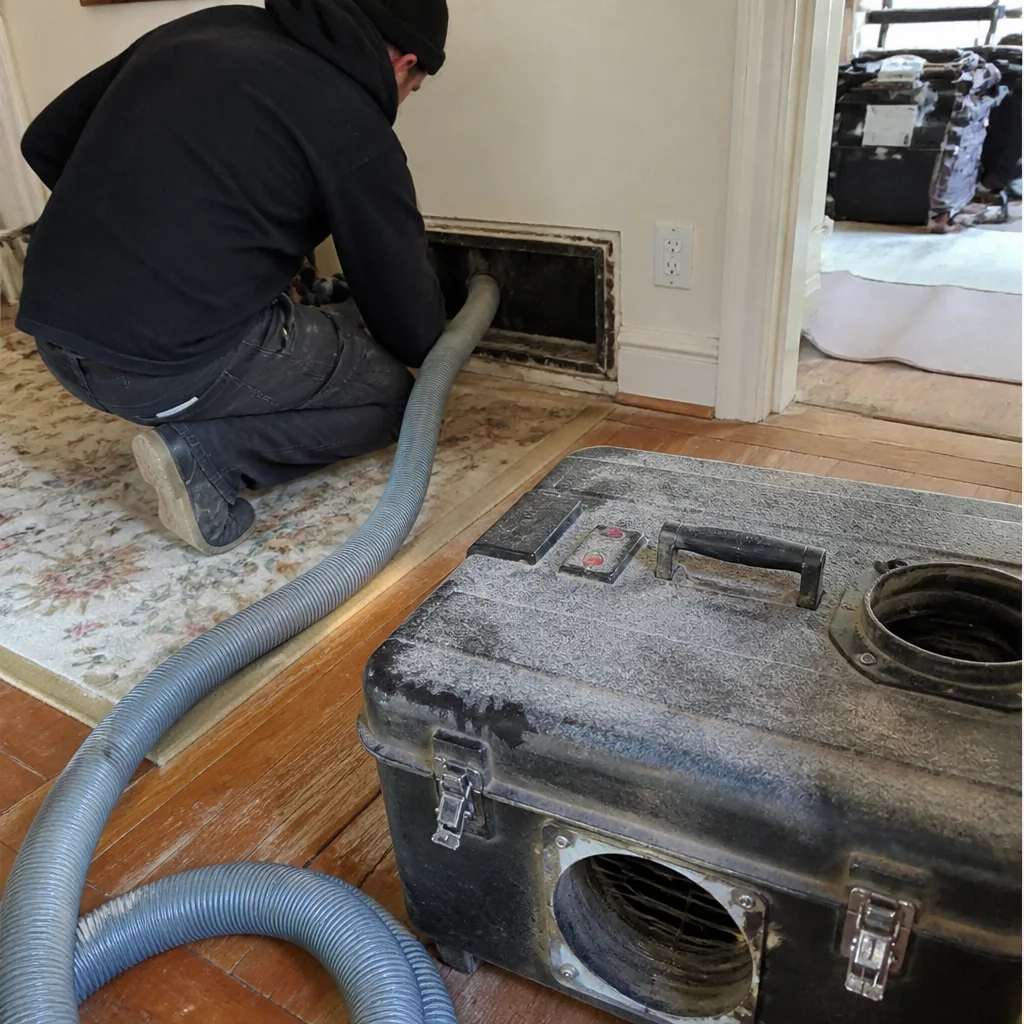 Before
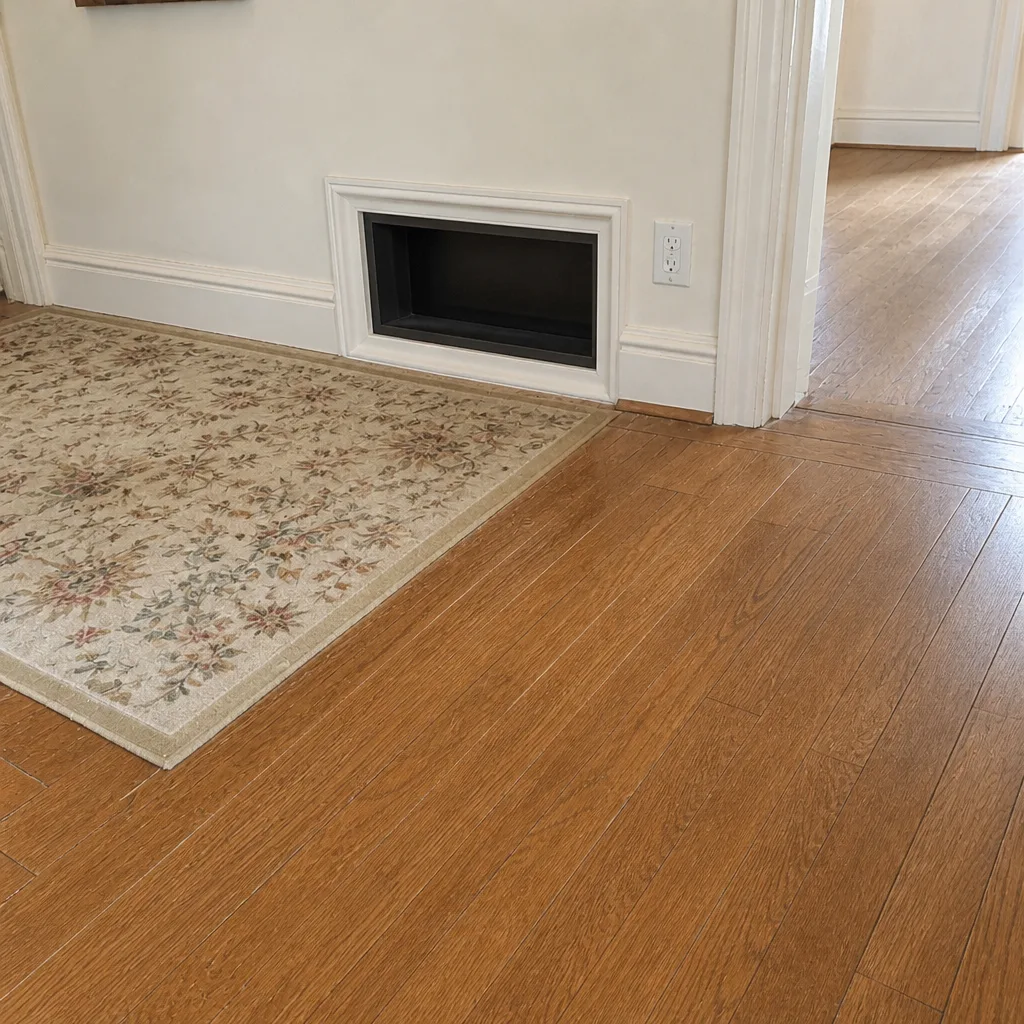 After
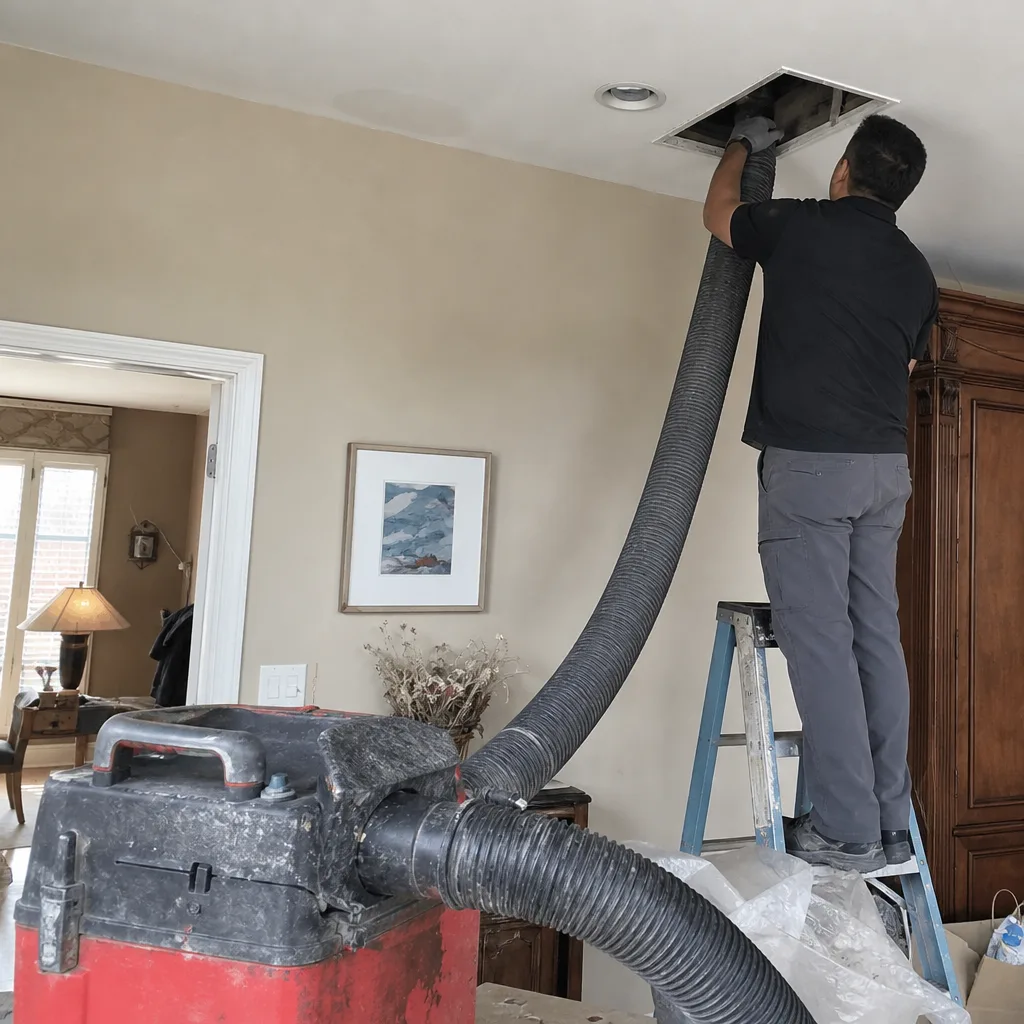 Before
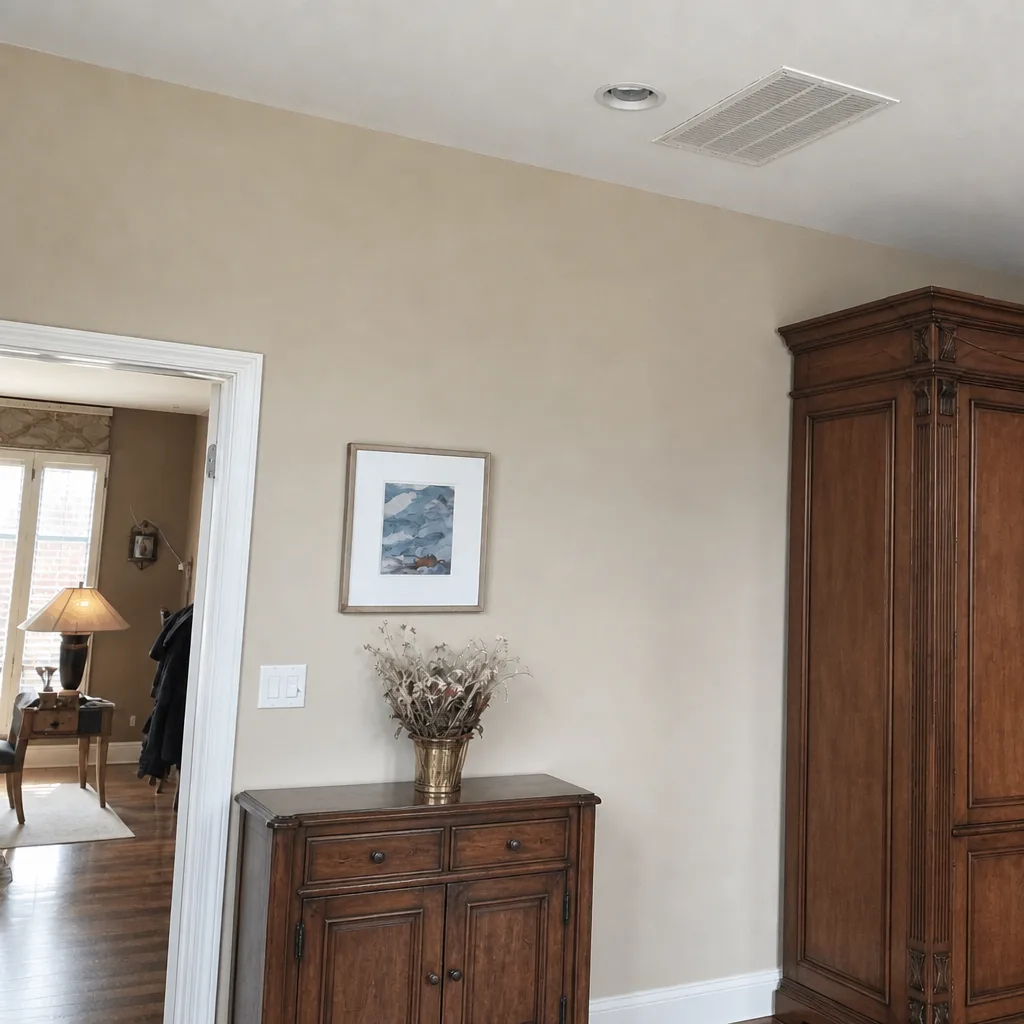 After
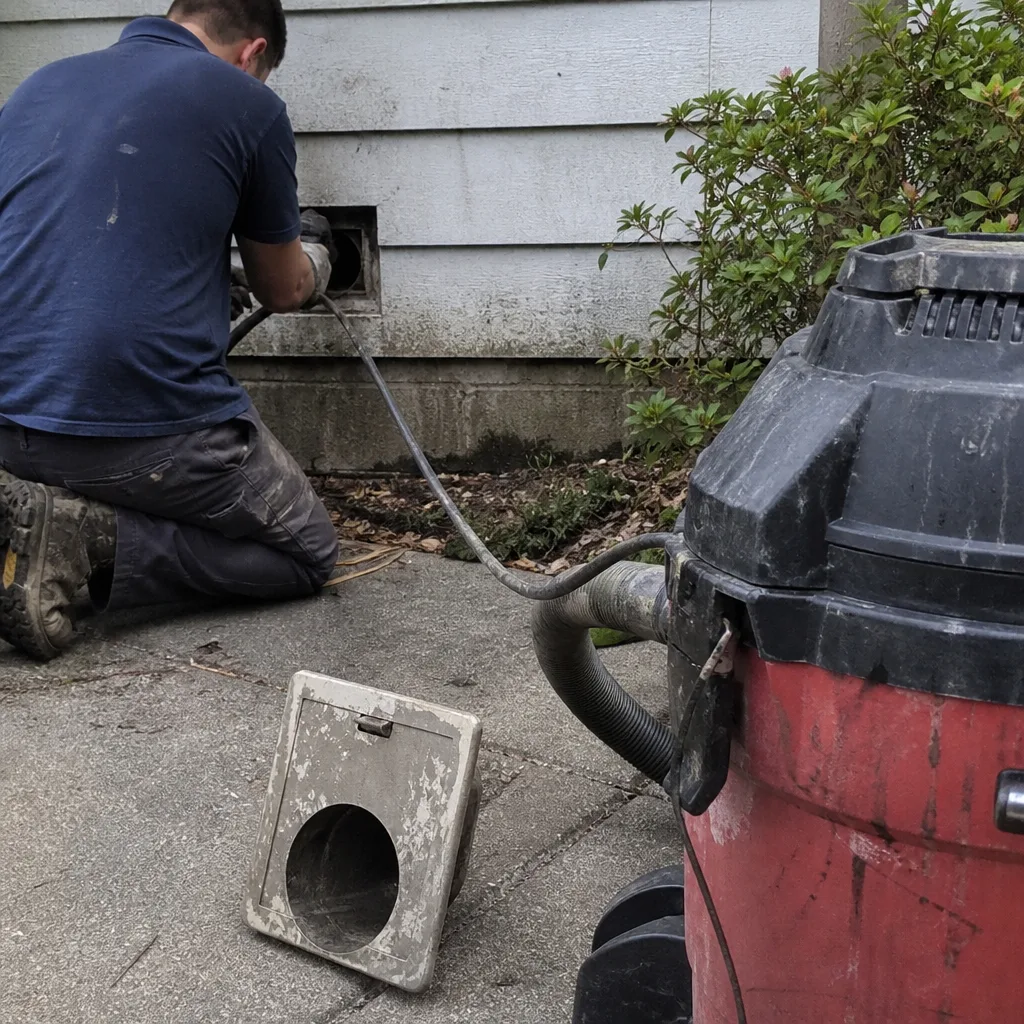 Before
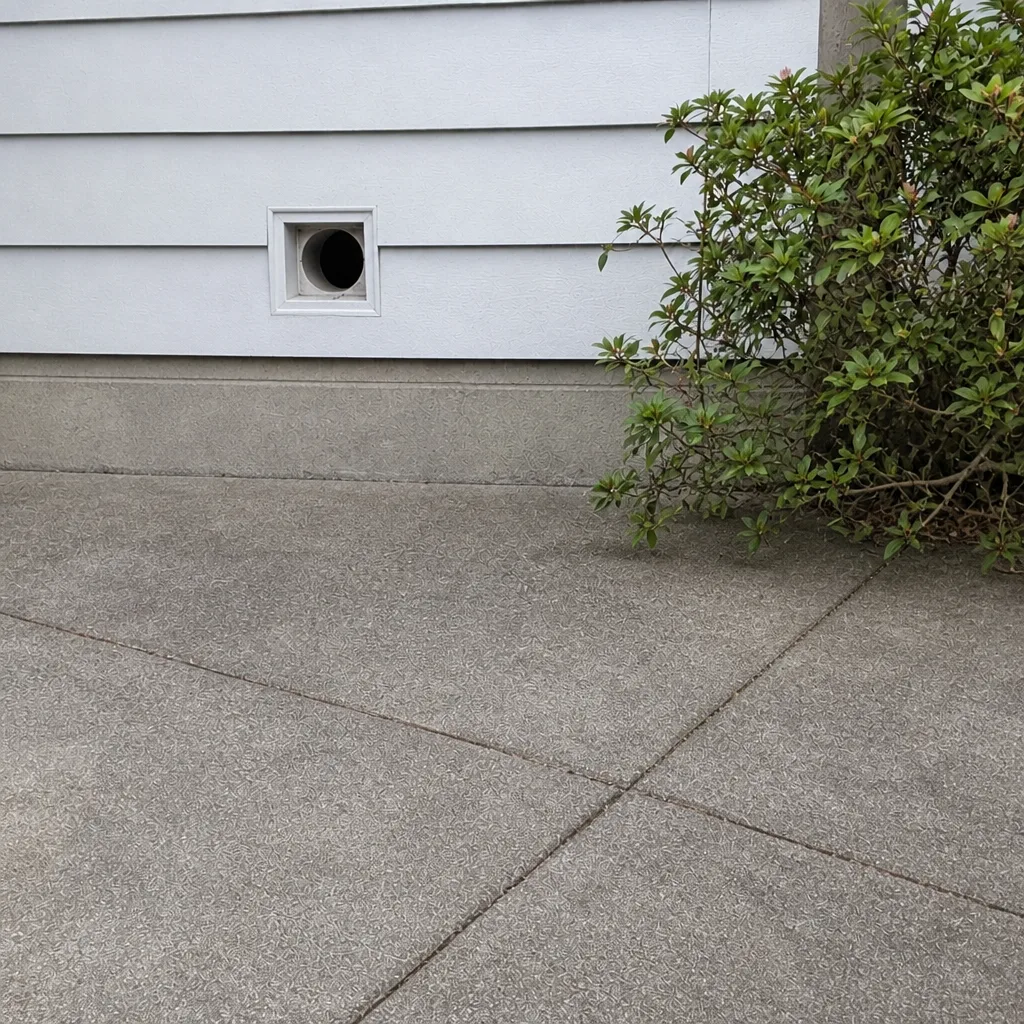 After
When to Call a Professional
Some conditions justify a same-week call rather than a wait-and-see approach. Visible debris inside a register boot, a strong musty smell when the system runs, standing water in the condensate pan, uneven airflow that’s gotten noticeably worse, or a home that just came through an evacuation-level smoke event. Each of these is a signal the system needs a real inspection, not a filter change. Homes with an immunocompromised occupant, pets that shed heavily, or anyone with a documented respiratory condition also warrant a quicker call. One more often-overlooked trigger: if you’re nearing the end of a cleaning interval and you’re about to sell or buy a home, a documented cleaning gives the next owner a baseline and heads off surprises in an inspection. Duct Cleaning Santa Rosa offers free estimates in Santa Rosa and the surrounding area. Call (855) 929-1609. We answer 24/7. Fast dispatch from 7am to 7pm, Sunday through Friday.
Frequently Asked Questions
Most Santa Rosa homes should be cleaned every three to five years, with the shorter end of that range for homes built before 1990, homes with pets, or homes that have been through a major smoke event. Homes that took on multiple wildfire smoke seasons in a short span should be inspected sooner rather than waiting for a fixed date. Call (855) 929-1609 for a free estimate.
Yes, when the system runs with windows shut during a smoke event, fine particulate is drawn through the return and into the ducts faster than the filter can capture it all. Homes that sat through multiple smoke seasons inside Santa Rosa’s airshed typically show more internal duct load than the standard 3 – 5 year interval assumes. A filter change right at the end of each event limits the accumulation. Call (855) 929-1609 for an inspection estimate.
MERV 8 to MERV 11 is the working range for most Santa Rosa residential systems. It captures the bulk of duct-loading particulate without straining the blower. Higher ratings (MERV 13 and up) can work, but only if the system’s static pressure has been checked and the blower can handle the extra restriction. Call (855) 929-1609 to talk through filter sizing for your air handler.
A camera scope is the only reliable answer. If the interior of the duct is intact and simply loaded with debris, cleaning is the fix. If we find crushed flex, separated joints, or liner pulling away, the system needs repair, not just cleaning. That’s why we offer air duct repair separately from cleaning. Call (855) 929-1609 to book a camera inspection.
Ask for before-and-after photos of your own ducts, CFM readings from the supply registers, and a written summary naming any issues found during the work. Those items give the next service provider a real baseline. If a company can’t produce them, that tells you as much as the cleaning itself. Call (855) 929-1609 for a free estimate and to see a sample report.
Yes. Dryer vent cleaning is part of our core scope, and it’s worth including on the same visit because it’s the maintenance item Santa Rosa homeowners skip most often. A dryer vent that’s loaded with lint is a real fire risk, and it’s not something the average air duct cleaner addresses. Call (855) 929-1609. We answer 24/7. Fast dispatch from 7am to 7pm, Sunday through Friday.
The Bottom Line
The national three-to-five-year rule is a starting point, not a schedule. Santa Rosa’s smoke seasons, the pre-1990s housing stock across much of the city, and the attic temperature cycles that break down duct liners all shift the answer toward a risk-tier approach. Set your interval by your home’s tier. Watch the AQI and bring inspections forward after smoke events. Match your filter MERV to the system rather than the shelf, and change it on the schedule the system actually needs. Ask for before-and-after photos, CFM readings, and a written summary after every cleaning so the next visit starts from a real baseline. And include the dryer vent while you’re at it.
The point of a maintenance schedule isn’t to have a calendar. It’s to know, at any moment, that the air coming through your vents is air you can trust. If we can help you get to that point with professional-grade equipment and the ability to repair what we find, we’d like to hear from you. Call (855) 929-1609 for a free estimate. We answer 24/7. Fast dispatch from 7am to 7pm, Sunday through Friday.
Written by the team at Duct Cleaning Santa Rosa.