
Last updated November 15, 2026
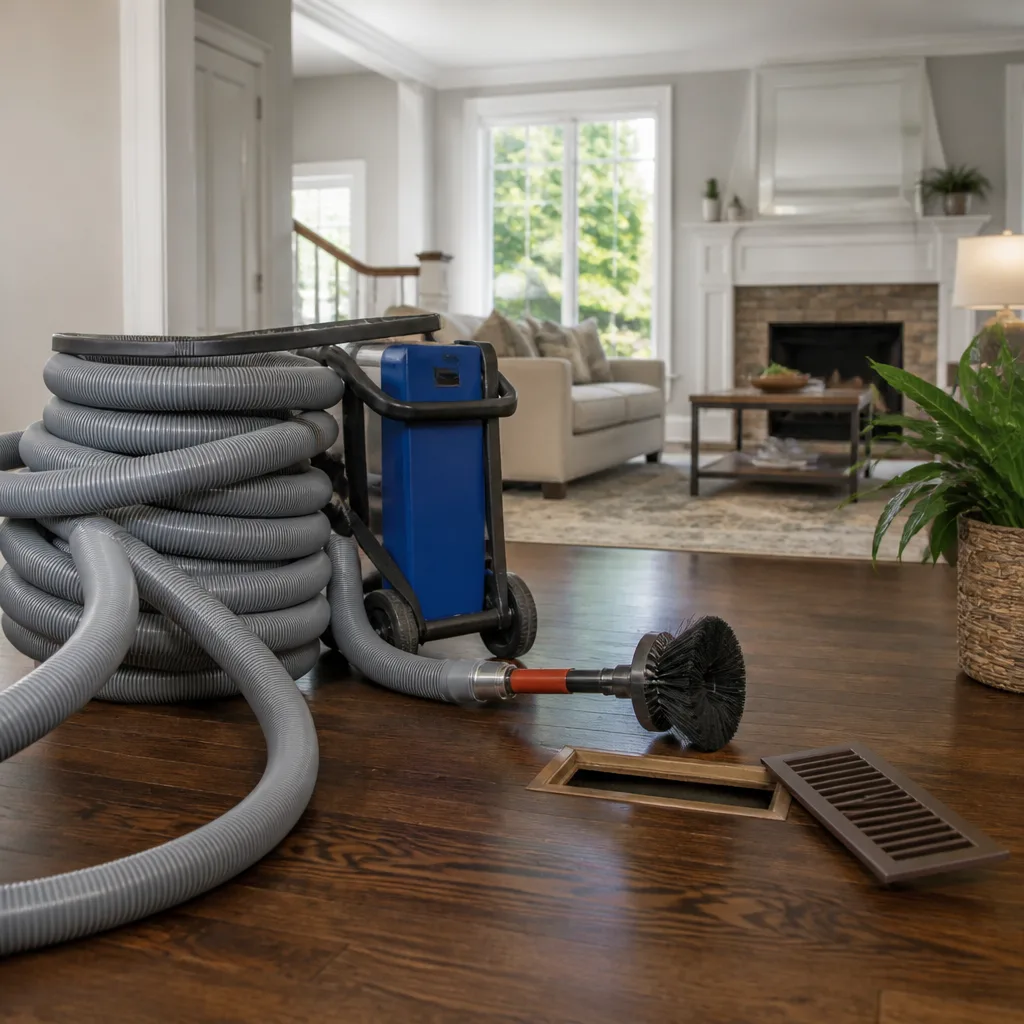 Whole-home duct cleaning
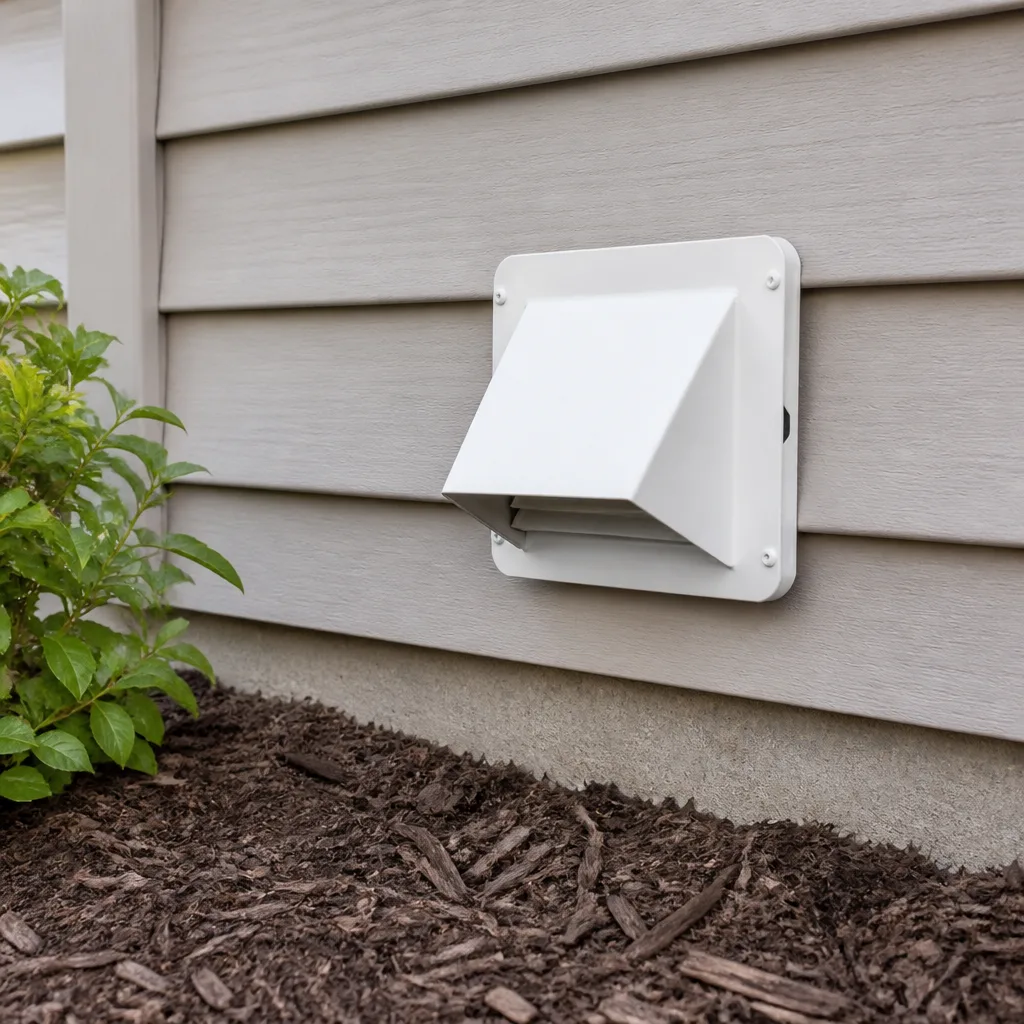 Dryer vent cleaning
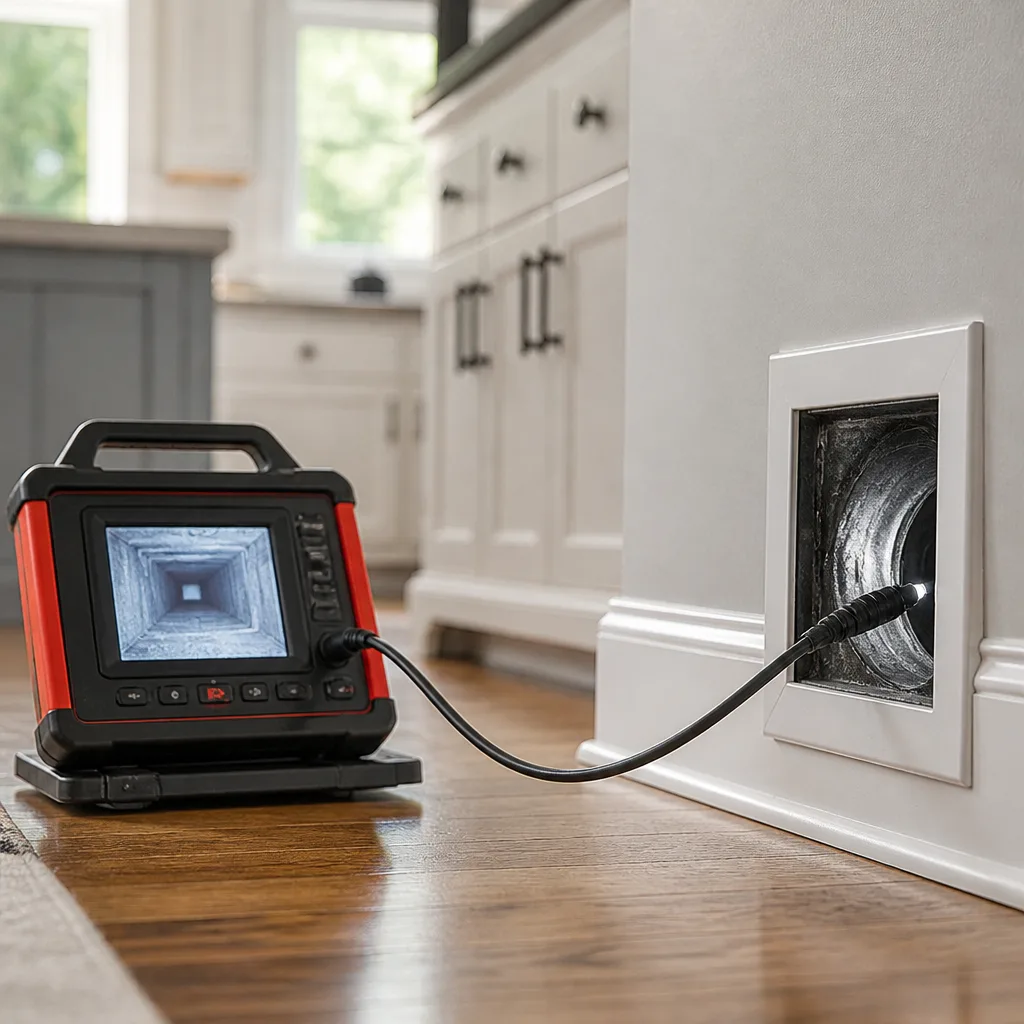 Camera inspection
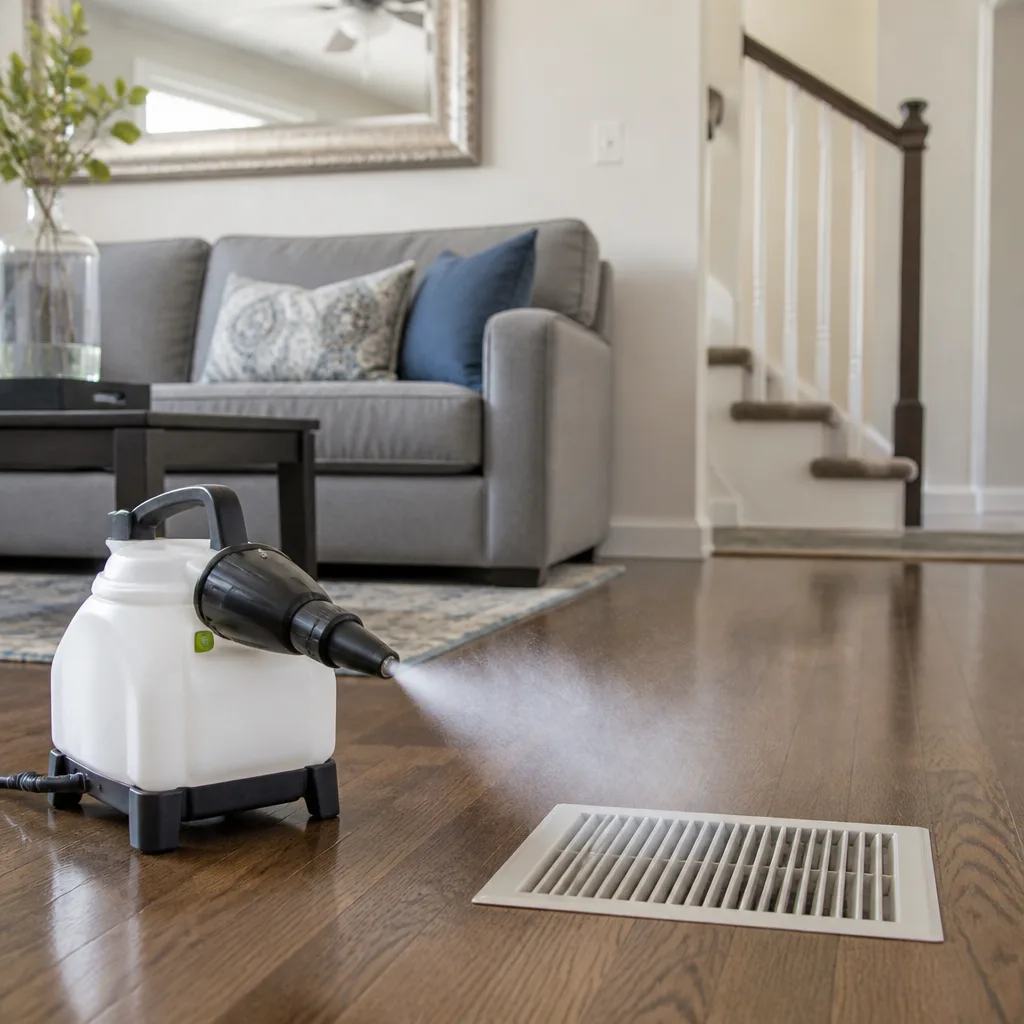 Sanitizing & deodorizing
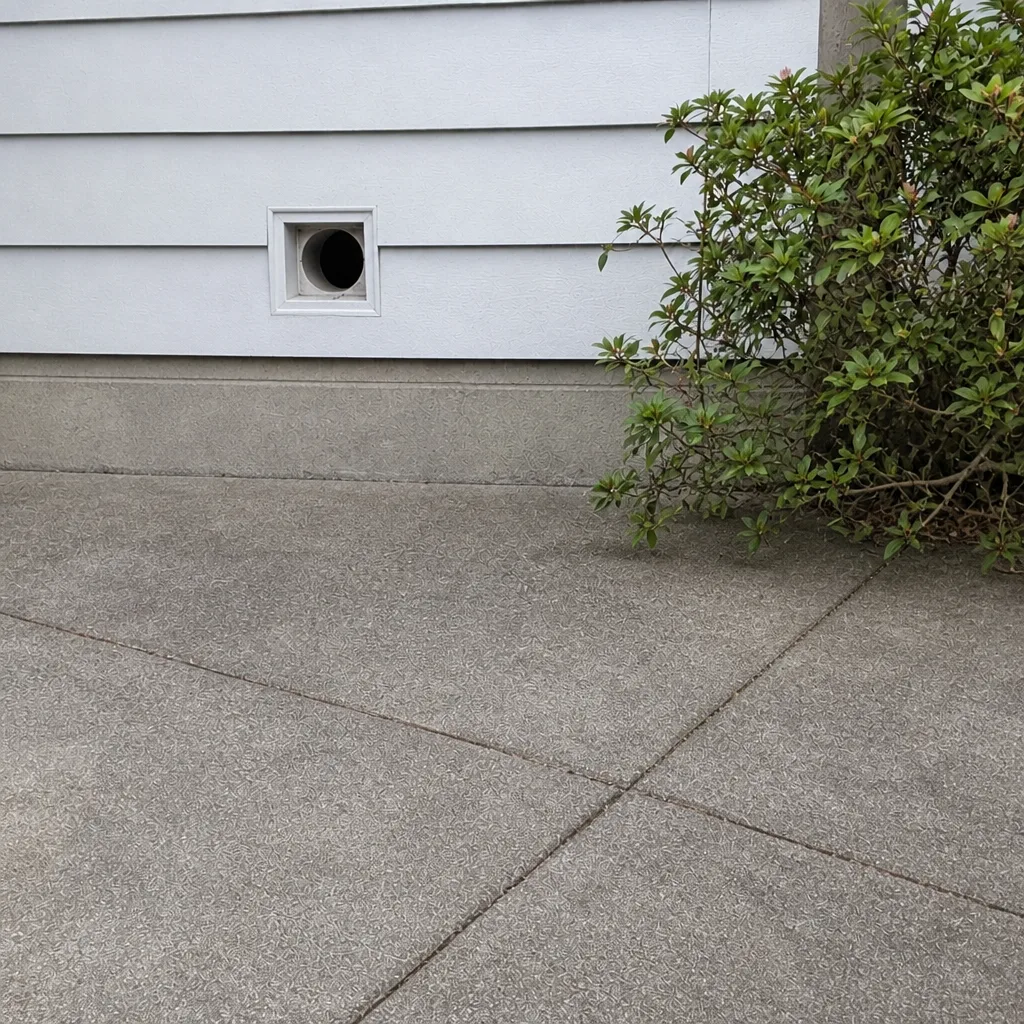
Whole-system duct and dryer vent check with before-and-after photos - you see exactly what came out of your vents
That "$99 whole-house special" is a bait ad - the real number appears once they are in your hallway, or the "clean" is a shop-vac at the register. We photograph the inside of your ducts before and after instead.
Seasonal Air Duct Cleaning Care for Santa Rosa: Year-Round Homeowner’s Guide
Most Santa Rosa homeowners schedule duct cleaning in spring out of habit. It feels logical: allergies are coming, the AC is about to start running, so get the ducts clean before the season. But that timing misses the worst contamination window. In Santa Rosa, the heaviest load on a forced-air system arrives in late fall and early winter, after months of recirculated smoke particulate and fine ash have settled into duct liner surfaces and return plenums. By the time spring arrives, your system has already pushed that material through the air handler for an entire heating season. This guide walks through Santa Rosa’s actual duct-stress calendar month by month, explains why post-fire-season cleaning outperforms pre-allergy-season cleaning for most households on a single-cleaning budget, and covers the filter, inspection, and system-check decisions that belong alongside any cleaning.
Quick Answer
For most Santa Rosa households, the best single time to clean air ducts is November through December, right after fire season ends and before the winter heating system runs hard. That timing removes embedded smoke and ash particulate before it recirculates for months. Households with allergy-sensitive occupants or pets often add a second cleaning in late winter, ahead of the Coast live oak pollen surge in February and March. Summer AC runtime above 10 hours a day is a separate trigger for inspection, not cleaning.
Styles & brands we work with
- Whole-home duct cleaning
- Dryer vent cleaning
- Camera inspection
- Sanitizing & deodorizing
Table of Contents
- Why Santa Rosa’s Duct Calendar Doesn’t Match National Guides
- Month-by-Month: What’s Actually Entering Your Ducts
- Why Post-Fire-Season Cleaning Beats Pre-Allergy-Season Cleaning
- Summer Runtime and Return Plenum Compaction
- Filter Upgrade Timing: When MERV-11 Helps and When It Hurts
- Pre-Summer and Pre-Winter Checks That Should Come First
- Repair vs. Clean: Which Problem Are You Actually Solving?
- Dryer Vent Cleaning on a Seasonal Schedule
Why Santa Rosa’s Duct Calendar Doesn’t Match National Guides
National duct-cleaning advice assumes four clean seasons with a hard winter. Santa Rosa doesn’t work that way. Winters are mild and wet, summers are dry and warm, and the fire season overlays both with a separate contamination cycle that national guides never account for. Add a pollen burst in late winter that arrives earlier than most of the country and construction dust from active rebuild zones, and you get three distinct duct-stress periods rather than one.
What that means in practice is a homeowner here shouldn’t follow the “clean once in spring” rule. The load on a Santa Rosa duct system is not evenly distributed across the year. It comes in pulses:
- Fire season (roughly July through October): fine ash, smoke particulate, and soot from Diablo wind events and nearby wildfire activity pull into return air. Systems running AC in these months pull more than systems running heat.
- Winter moisture and pollen (roughly November through March): wet marine air keeps relative humidity higher, which changes how dust and particulate behave on duct surfaces. Coast live oak pollen releases in late winter and gets pulled through return grilles with the first warm days.
- Spring construction and rebuild dust (roughly March through June): active rebuild zones like Coffey Park continue to generate drywall dust, sawdust, and fine construction particulate that migrates into nearby homes through return air and open windows.
The result is a system that accumulates in three different modes, and the response that fits one mode doesn’t fit the others. A single well-timed cleaning can catch most of the annual load if you schedule it after the worst pulse and before the next one. That’s why the November-December window works for so many Santa Rosa homes: it captures the fire-season load before the heating system pushes it through for a whole winter.
If you’re still deciding between a seasonal cleaning and a full mechanical inspection, the air duct cleaning process covers the cleaning side. The rest of this guide covers the timing, the filter decisions, and the repair-vs-clean distinction that national guides skip.
Month-by-Month: What’s Actually Entering Your Ducts
The single best thing you can do for your system is understand what’s coming in, when. Here’s the actual shape of the year for a typical Santa Rosa home.
January through March
Wet marine air keeps ducts cool and slightly damp. Coast live oak pollen begins releasing in late February and March on the first warm, dry days. Return grilles catch a load of pollen quickly, and homes with pets or occupants with seasonal allergies see the sharpest drop in air quality in this window. Ducts that weren’t cleaned after fire season have been recirculating ash and soot for two to four months by now, and the combination of pollen, moisture, and old particulate is what most households notice as a “musty smell when the heat kicks on.”
April through June
Warmer days trigger longer AC runtime. Construction dust from rebuild zones in Coffey Park and neighboring areas of Santa Rosa moves on dry wind and finds its way into return air, especially in homes with nearby active building sites. Drywall dust is fine and abrasive; it coats duct interiors quickly and settles into return plenums.
July through October
Fire season. Diablo wind events push dry air and smoke across the region. Even in years without a nearby fire, airborne ash from regional activity is a real load on return air. Homes that run AC hard all summer pull more of it in than homes running heat. The material deposited in this window is the material that most needs to come out before winter.
November and December
The window that matters most. Fire season is wrapping up, particulate has had months to embed in duct liner surfaces, and the heating system is about to run for months. This is the highest-value single cleaning window on the Santa Rosa calendar for most homes. If you only clean once a year, clean here.
Why Post-Fire-Season Cleaning Beats Pre-Allergy-Season Cleaning
Most homeowners schedule cleaning in spring because allergies are on their mind. That’s an understandable habit, but it optimizes for the wrong thing. Spring cleaning pulls out last year’s pollen before pollen season starts, which is helpful but small. November-December cleaning pulls out fire-season ash and smoke particulate before the heating system runs hard for months, which is a much bigger effect on indoor air quality and on system efficiency.
Here’s the reasoning, step by step:
- Fire-season particulate is finer and more adhesive. Smoke and ash deposits embed in duct liner surfaces and don’t loosen on their own once settled. Spring cleaning after a winter of heating will pull the material out, but it has already moved through the air handler for four to six months by then.
- The heating system amplifies circulation. Winter heater runtime is longer and continuous compared with summer AC in mild Santa Rosa, which means the same mass of particulate gets recirculated through the home more times.
- Spring cleaning wastes the “already clean” state. Clean in spring, and by the time fire season ends in October, your ducts have the entire annual load in them again, right when heating starts. Clean in November, and you get a clean system through the heavy winter circulation window plus the following spring pollen surge.
- Pollen is seasonal and short-lived. Coast live oak pollen releases over roughly four to six weeks. Smoke and ash deposits are structural. If you can only clean once, prioritize the deposit that doesn’t clear on its own.
For households with allergy-sensitive occupants, a second cleaning in late winter is a reasonable addition. For households focused on system efficiency and indoor air quality year-round, a single post-fire-season cleaning delivers the most value. In our experience working with systems on both sides of this decision, the post-fire-season window consistently produces the better outcome for a single-cleaning budget.
Summer Runtime and Return Plenum Compaction
Return plenums are the widest part of most residential duct systems, and they’re where the biggest volume of debris settles. In Santa Rosa homes running AC more than 10 hours a day during the hot months, return plenums accumulate faster than the rest of the system because they handle the total CFM of return air at the lowest velocity.
Low velocity is good for quiet operation and bad for holding debris in suspension. Particulate falls out of the air stream in the plenum and compacts against the bottom and edges. Once compacted, it stops behaving like loose dust and starts behaving more like a film that requires contact brushing rather than a vacuum to remove. That’s why we use a Rotobrush contact-vacuum brush system on every Santa Rosa job: the brush physically lifts compacted material off the duct wall before the vacuum pulls it out, instead of hoping a straight vacuum will pull it loose.
When to inspect based on runtime, month by month:
- AC under 4 hours a day: a single annual cleaning in November-December is typically enough. Inspect the plenum at the same time.
- AC 4 to 10 hours a day: inspect in July, not just clean. Debris buildup can reveal a leaking return duct or a filter that’s bypassing.
- AC over 10 hours a day: inspect at the start of summer. Homes with long AC runtime push more total CFM through the system and accumulate more debris in the return plenum. If a leak or compromised fitting shows up, it’s cheaper to fix it before compaction hardens the deposit.
There’s a second effect homeowners rarely connect to duct health: runtime above 10 hours often goes with a system that’s short-cycling or has an airflow restriction somewhere. A duct inspection isn’t a diagnostic, but it’s a useful trigger for one. If a plenum is unusually loaded on one side but not the other, or debris is concentrated at a single junction, that’s a signal worth taking to an HVAC technician.
Filter Upgrade Timing: When MERV-11 Helps and When It Hurts
Filter upgrades are one of the most-misused decisions in duct care. The right MERV rating depends on your system’s design static pressure and on what’s actually in the air that season. Higher MERV isn’t automatically better, and in older Santa Rosa homes with undersized return grilles, it can do real damage.
Here’s how to think about it seasonally:
- Fire season (July through October): this is when a MERV-11 filter earns its keep. It catches finer smoke and ash particulate that MERV-8 lets through. If your system can handle the added restriction without dropping airflow below design, install a MERV-11 in early July and change it more often than usual during heavy smoke periods.
- Winter (November through March): step down to MERV-8 or MERV-10 if the system runs noticeably harder with the higher MERV filter. Coast live oak pollen is a larger particle; MERV-8 catches most of it without overloading the blower.
- Spring construction season (March through June): MERV-11 again if you’re near active rebuild zones, but check the filter monthly. Drywall and sawdust load a filter fast, and a clogged high-MERV filter is worse than a clean low-MERV one.
The risk with pushing MERV ratings up in an older system is heat exchanger damage. When filter restriction rises, airflow drops, and the heat exchanger runs hotter than designed. Over a heating season, that’s metal fatigue. Not every older Santa Rosa system is designed for MERV-11, and the way to know is a static pressure reading, not a guess. If you’re not sure, ask before you upgrade, and don’t rely on the filter marketing on the package to tell you what your system needs.
Businesses and property managers with multiple units often install Honeywell or Aprilaire filtration at the air handler for a better balance of filtration and pressure drop than a high-MERV 1-inch filter can deliver. We work with both product lines and can integrate a whole-home air quality upgrade at the time of cleaning so the filter and the ducts are handled as one system.
Pre-Summer and Pre-Winter Checks That Should Come First
Cleaning a system with an underlying mechanical problem wastes the cleaning. If the blower is pulling from a breached return duct or the evaporator coil is fouled, clean ducts just collect new debris faster. The pre-season check exists to catch that before you spend money on cleaning.
Here’s the order that makes sense:
- Visual inspection of accessible ducts and plenums. Look for disconnected joints, crushed flex duct, torn liner, or visible debris concentrated on one side of a run.
- Filter condition and bypass check. A filter that doesn’t seal against its frame lets unfiltered air around it. That’s a common cause of fast re-contamination after a cleaning.
- Airflow and static pressure reading. Skip this and you’re guessing at MERV choices. A reading tells you whether the system has headroom for a tighter filter.
- Blower and coil check. A fouled evaporator coil cuts efficiency and puts more strain on the blower. It’s a mechanical problem, not a duct problem, and it’s worth diagnosing before cleaning.
- Return plenum inspection. This is where the biggest load sits, and where a hidden leak will show.
- Duct cleaning. Only after the above.
Pre-summer checks in April or May catch problems before the heavy AC months. Pre-winter checks in October do the same before the heating season. Either way, the goal is the same: clean ducts inside a healthy system, not inside one that will foul them again right away.
When the inspection turns up a real structural problem, that’s where the Santa Rosa specialists who handle repair as well as cleaning make a difference. A cleaner who can only clean will leave a breached return duct in place and call the job done. A crew that also does air duct repair will flag it, fix it, and then clean.
Repair vs. Clean: Which Problem Are You Actually Solving?
Not every dirty duct problem is a cleaning problem. Two households can have the same complaint – dust on surfaces, musty smell, higher energy bill – and one needs cleaning while the other needs repair first. The distinction matters because cleaning a compromised system is a temporary fix at best.
Common signs that repair belongs on the plan, not just cleaning:
- Temperature differences between rooms that weren’t there before, or that show up seasonally. Often a sign of a crushed or disconnected run.
- Dust settling on surfaces shortly after a cleaning. Points to a return-side breach pulling unfiltered air from a crawlspace or attic.
- Higher energy bills with no change in usage. Leaky ducts lose 20 to 30 percent of conditioned air in typical homes, though the actual figure depends on the system.
- Visible damage or a soft spot in flex duct. Flex duct doesn’t self-repair; a compressed section stays compressed.
- Persistent musty smell even after cleaning. Moisture intrusion somewhere in the system, not just surface dirt.
Our approach to air duct repair is to diagnose the leak or damage first, seal or replace the affected section, then clean. It’s the opposite order from a clean-and-go approach, and it costs less over a couple of years because you’re not re-cleaning the same system every season.
Dryer Vent Cleaning on a Seasonal Schedule
Dryer vent cleaning belongs on the same seasonal calendar as duct cleaning, and it’s the piece most homeowners overlook. Lint accumulation in a dryer vent is a leading cause of residential structure fires. A vent that hasn’t been cleaned in a year or more can hold enough lint to ignite from a normal dry cycle.
The seasonal timing that works for most Santa Rosa homes:
- Once a year minimum. Best done in the same visit as the post-fire-season duct cleaning in November-December, so the whole forced-air and exhaust system is handled at one time.
- Twice a year for heavy laundry households. Homes with more than four loads a week, or households with pets, benefit from a mid-year cleaning as well.
- Any time after a long dry season. Dryer vents in wildfire-prone regions accumulate fine ash alongside lint. If your area has seen heavy smoke, get the vent cleaned regardless of the calendar.
Professional dryer vent cleaning removes lint from the full run of the vent, not just the section accessible from the outside. The full run matters because the fire risk sits in the mid-vent sections where lint has the most heat exposure. We handle it as part of the same visit as duct cleaning so the homeowner doesn’t have to schedule twice.
Common Mistakes to Avoid
- Cleaning in spring by default. Spring cleaning gets last year’s pollen but not this year’s fire-season load. If you only clean once, clean in November or December after fire season, and let the spring pollen surge pass through a clean system instead of a contaminated one.
- Running a MERV-13 filter in an old system without a pressure reading. High-MERV filters can restrict airflow enough to push heat exchanger temperatures above design. Ask for a static pressure reading before you upgrade, especially if the system is more than fifteen years old.
- Cleaning ducts with a breached return plenum. Cleaning a system that’s pulling unfiltered air from a crawlspace just re-contaminates the ducts on the first heating cycle. Diagnose the leak before you clean.
- Skipping dryer vent cleaning because the dryer “still works.” A clogged vent typically dries clothes more slowly before it becomes a fire risk. Slow drying is the warning, not the failure.
- Hiring a cleaner who only vacuums. Vacuum-only cleaning can’t lift compacted debris off duct lining. Ask what equipment the company uses before you book; if they can’t name it, they’re probably using a shop vac.
- Ignoring the fire-season load. Santa Rosa homes that skip cleaning after fire season end up recirculating fine ash and soot through the heating system for months. Ash deposits don’t loosen on their own once embedded.
- Assuming a seasonal clean is enough without an inspection. A clean system with a leaking return duct is not a healthy system. The cleaning should come with an inspection, not instead of one.
See the difference
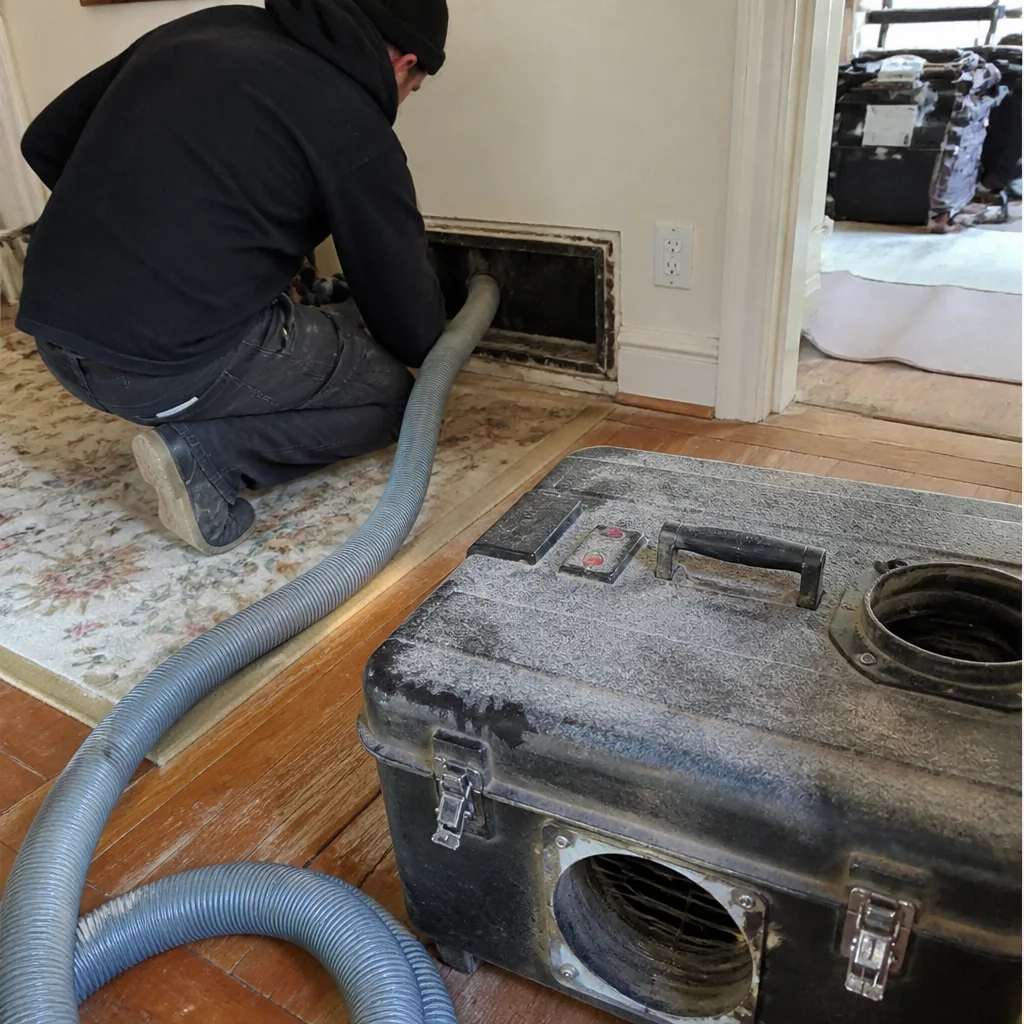 Before
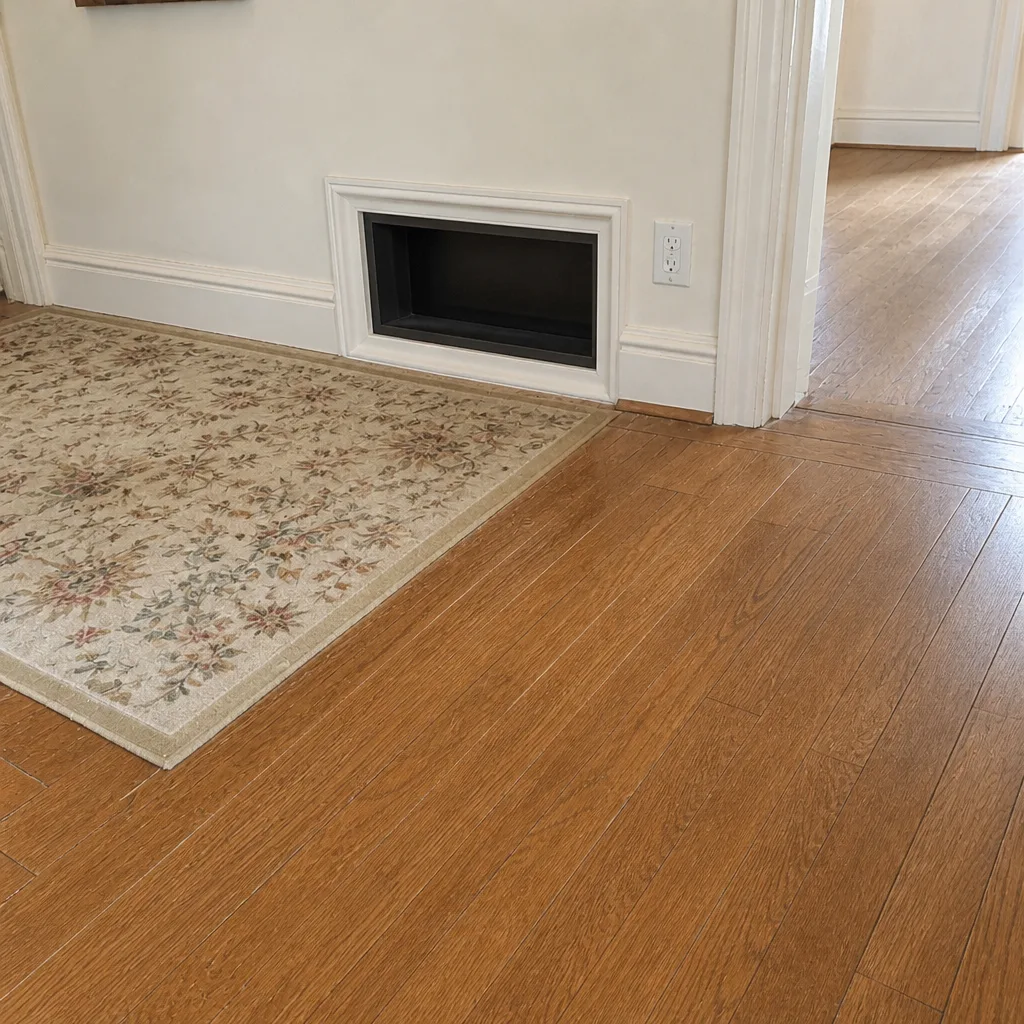 After
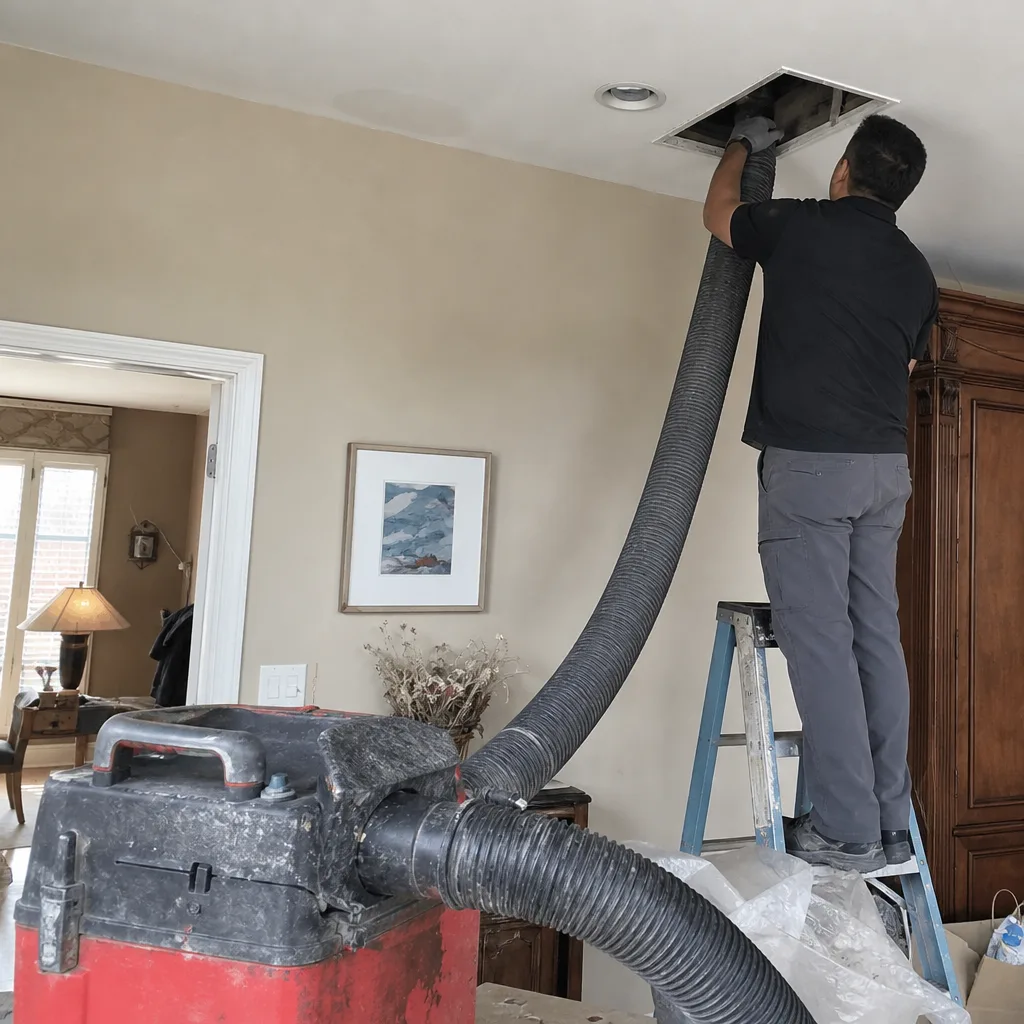 Before
 After
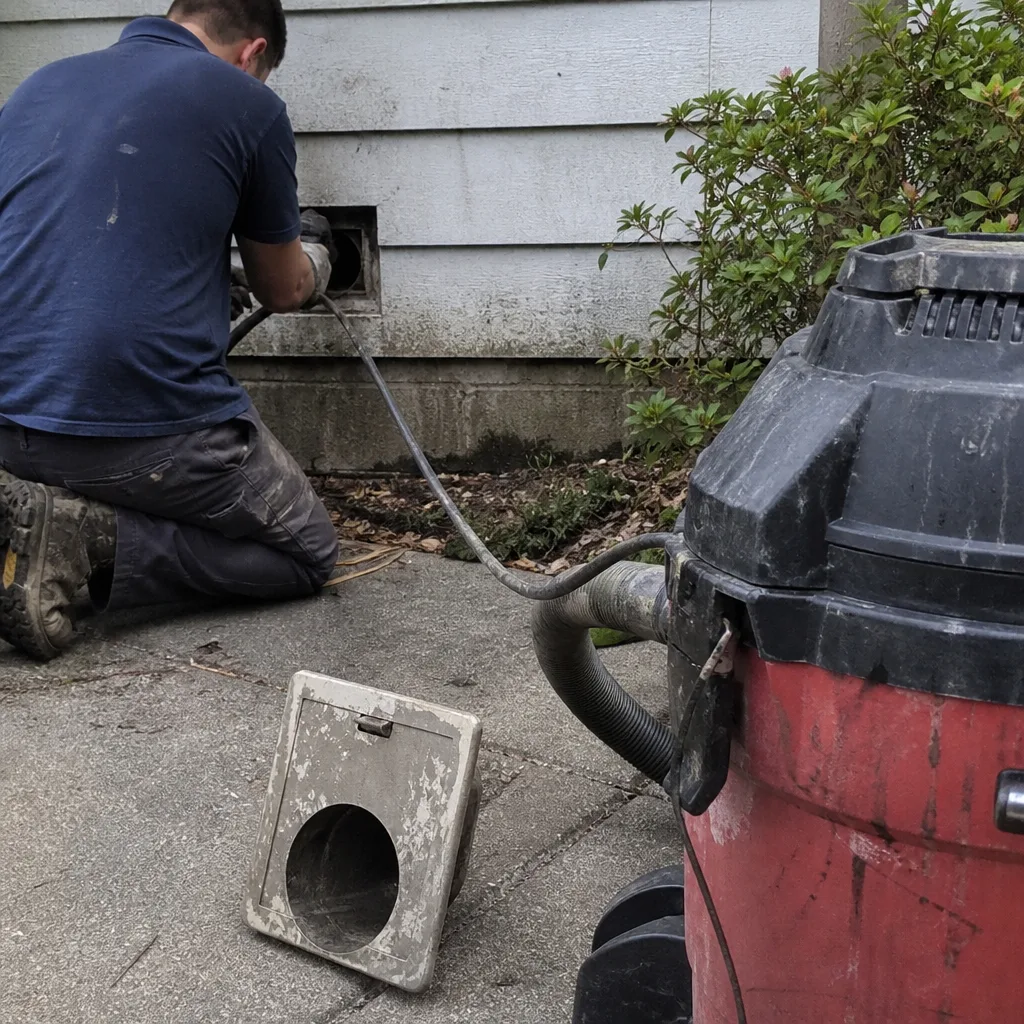 Before
 After
When to Call a Professional
Some duct and vent care is preventive; some is urgent. Call a professional if you’ve never had the ducts cleaned and the home is more than five years old, if a winter of heavy heater use produced a persistent musty smell, if you’ve noticed temperature swings between rooms that weren’t there before, or if the dryer is running more than one cycle to dry a normal load. Dryer vent cleaning, especially, isn’t a job for a shop-vac and a ladder; the fire risk sits in the mid-vent sections that only a full-run cleaning reaches.
If your home is near Coffey Park or another active rebuild zone and you’ve seen construction dust settling faster than usual, an inspection plus cleaning is worth scheduling in the spring. If the ducts haven’t been cleaned since before the last fire season, book a cleaning ahead of the winter heating months.
Duct Cleaning Santa Rosa offers free estimates in Santa Rosa. Call (855) 929-1609. We answer 24/7. Fast dispatch from 7am to 7pm, Sunday through Friday.
Frequently Asked Questions
For most Santa Rosa homes, once a year is enough, and the best timing is November through December, right after fire season. Households with allergy-sensitive occupants, pets, or heavy AC runtime often add a second cleaning in late winter before the Coast live oak pollen surge. If you live near an active construction or rebuild zone, an inspection in spring is worth adding even if you skip the cleaning. Call (855) 929-1609 for an exact quote – estimates are free.
Yes, for most Santa Rosa households on a single-cleaning budget. Post-fire-season cleaning removes embedded smoke and ash particulate before the heating system recirculates it for months. Spring cleaning removes last year’s pollen, which is useful but a smaller effect, and it leaves the following fire season’s load in place right when heating starts. Winter cleaning gets both windows with one visit.
Cost depends on the size of the system, the number of accessible runs, and whether repair is needed. We price per system, not per vent, and you get one flat price agreed before work starts, so there’s no coupon-to-invoice gap. You see before-and-after photos of your own ducts as part of the job. Call (855) 929-1609 for an exact quote – estimates are free.
Cheap quotes usually mean vacuum-only equipment, no inspection, or a per-vent pricing structure that grows on-site. A shop-vac setup can’t lift compacted debris off duct lining, and a crew that doesn’t inspect won’t catch a breached return plenum before cleaning, which means the ducts foul again within a heating cycle. We use Rotobrush contact-vacuum brush systems, Nikro HEPA-filtration units, and Abatement Technologies negative-air machines, and we quote a flat price per system.
You see it. Before-and-after photos of your own ducts are part of every cleaning, taken during the job. Combined with a named-equipment approach and a before-the-job written estimate, that’s a verifiable record of what happened inside your system. If a company can’t show you photos of your specific ducts, ask why.
MERV-11 makes sense during fire season and near active construction zones, when fine particulate is the load. Winter and spring are usually better with MERV-8 or MERV-10 unless your system can handle the extra restriction. Before you upgrade, get a static pressure reading; in older systems, a high-MERV filter can push airflow low enough to stress the heat exchanger. Ask before you buy the filter.
The Bottom Line
Santa Rosa’s duct calendar runs on three pulses: fire season, winter moisture and pollen, and spring construction dust. Cleaning once a year in November or December catches the heaviest load right before the heating system runs hard, which is the highest-value timing for most households. Spring cleaning has a place, but only as a second clean for allergy-sensitive homes. Filter choice should follow a static pressure reading, not the package. Dryer vent cleaning belongs on the same calendar as duct cleaning, ideally in the same visit. And cleaning only works when the system underneath is sound, which is why a repair-first, clean-second approach beats a vacuum-and-go service every time. The Duct Cleaning Santa Rosa team handles cleaning, repair, and dryer vent service as one scope, so you’re not scheduling three companies for one system.
Call (855) 929-1609 for a free estimate. We answer 24/7. Fast dispatch from 7am to 7pm, Sunday through Friday.
Written by the team at Duct Cleaning Santa Rosa.