
Last updated November 15, 2026
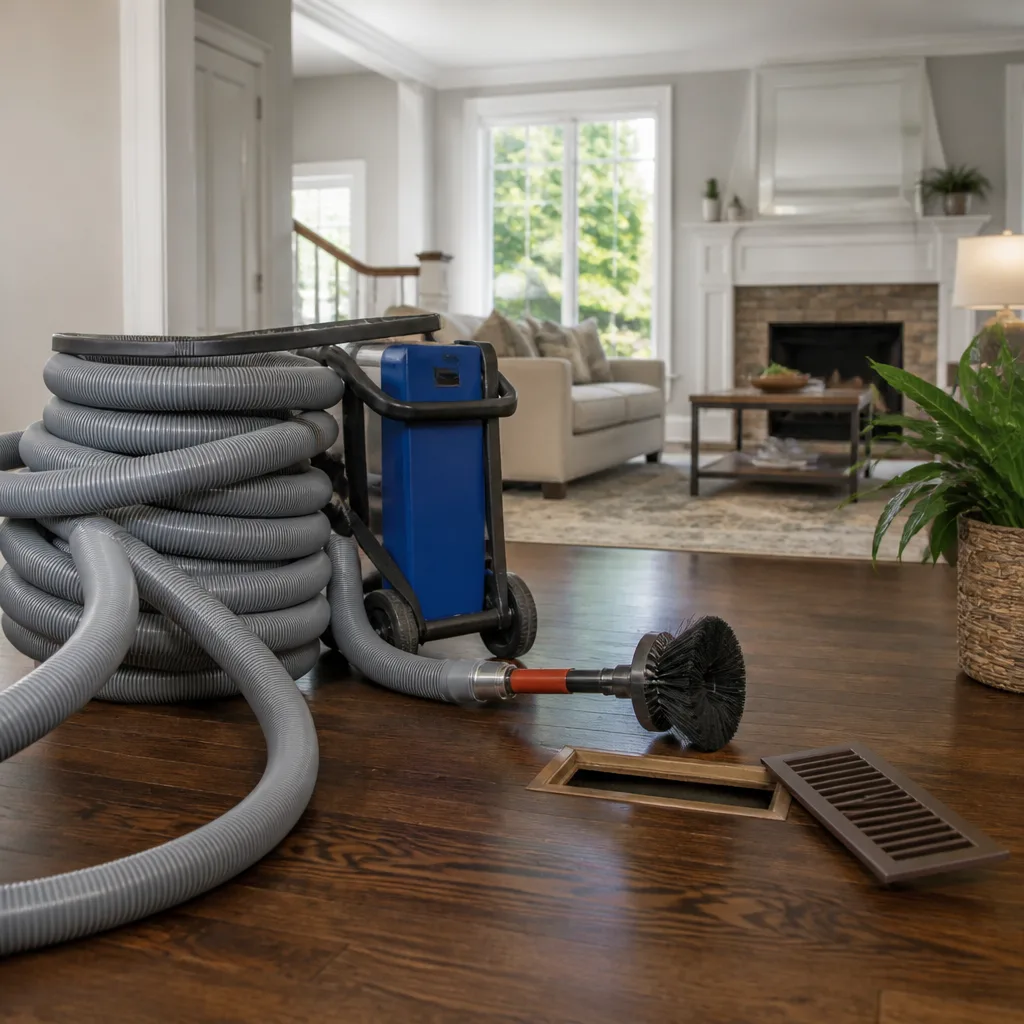 Whole-home duct cleaning
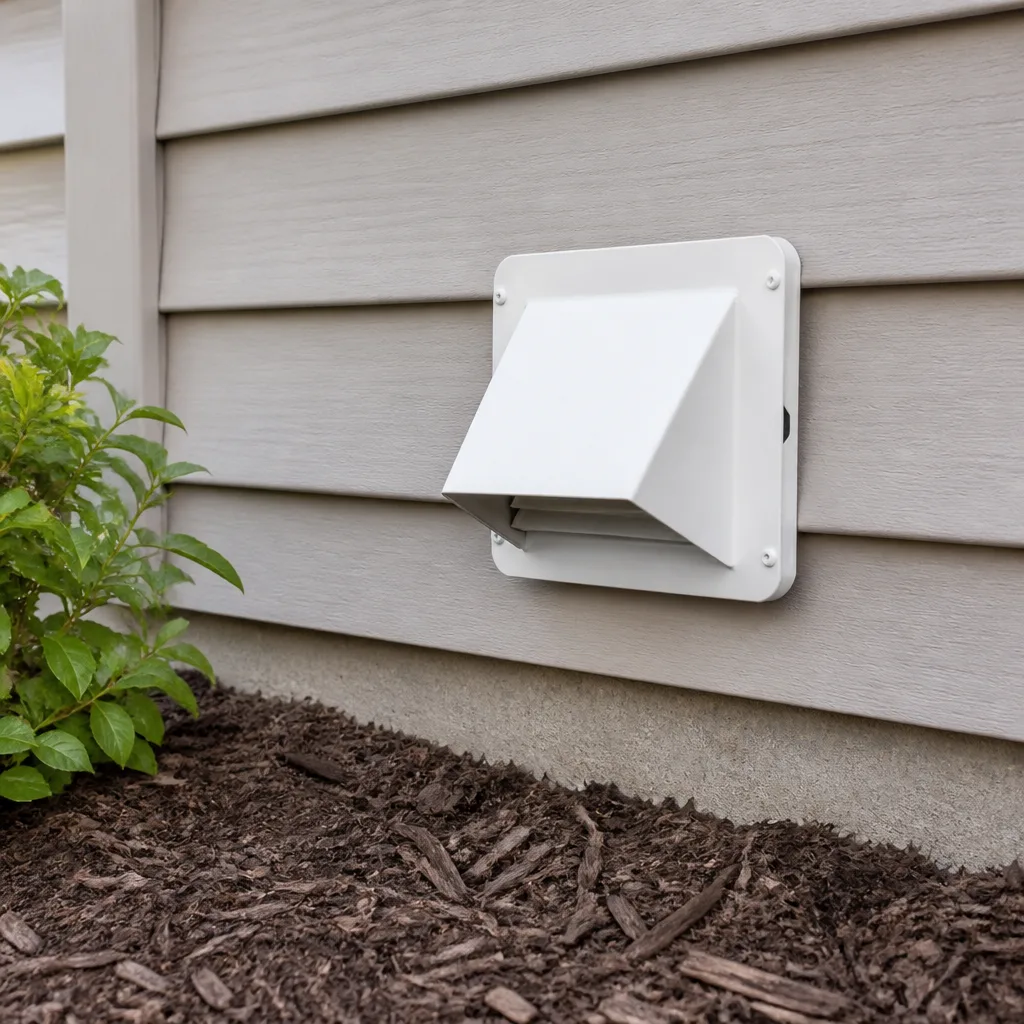 Dryer vent cleaning
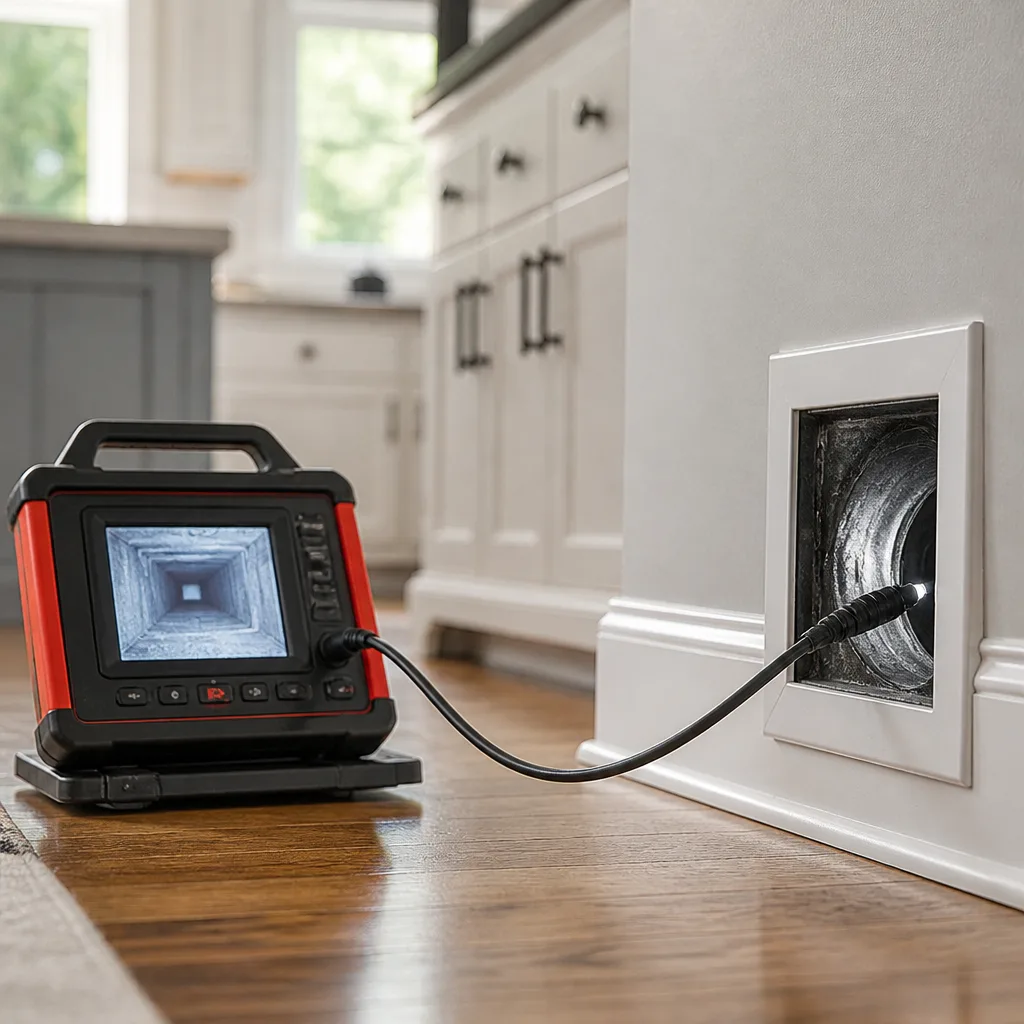 Camera inspection
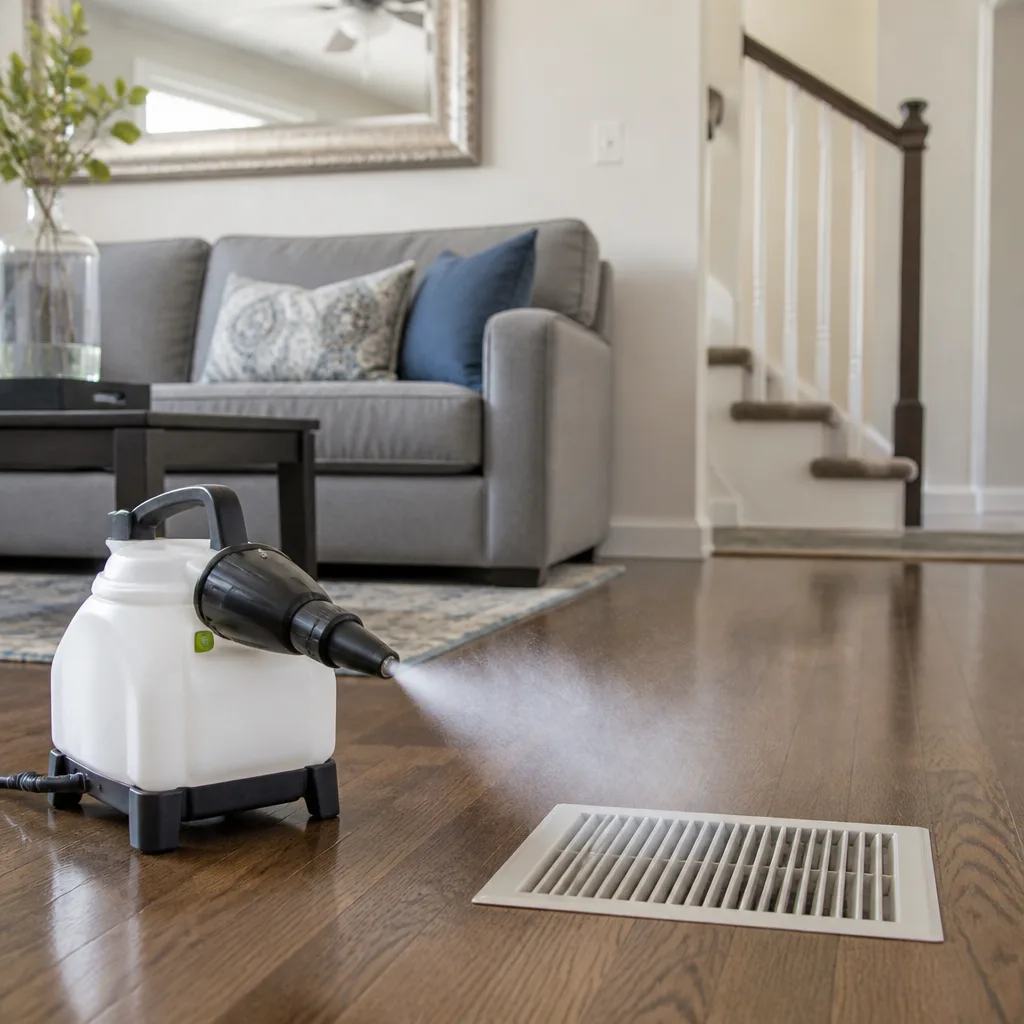 Sanitizing & deodorizing
Whole-system duct and dryer vent check with before-and-after photos - you see exactly what came out of your vents
That "$99 whole-house special" is a bait ad - the real number appears once they are in your hallway, or the "clean" is a shop-vac at the register. We photograph the inside of your ducts before and after instead.
Air Duct Cleaning Permits, Codes & Inspections in Santa Rosa, CA: What You Need to Know
Here’s the part of duct work most homeowners never hear about: cleaning your ducts is maintenance, but repairing them is construction. In California, the moment a technician seals a disconnected flex run with mastic or replaces a damaged plenum section, that job can cross from housekeeping into regulated mechanical work. The distinction matters in Santa Rosa because unpermitted mechanical work can surface at the worst time, during a home sale, an insurance claim, or a post-fire rebuild inspection. We wrote this guide to walk you through where that line actually sits, what Title 24 requires when ducts are sealed or replaced, and what paperwork you should walk away with.
Quick Answer
In California, routine air duct cleaning does not require a permit. Any repair, replacement, or modification of duct components is mechanical work under the California Mechanical Code and Title 24, and it may require a permit from the City of Santa Rosa, along with duct leakage testing when ducts are sealed or replaced. The contractor performing that repair should hold a C-20 Warm-Air Heating, Ventilating and Air-Conditioning license. Cleaning alone does not require that license; repair does.
Styles & brands we work with
- Whole-home duct cleaning
- Dryer vent cleaning
- Camera inspection
- Sanitizing & deodorizing
Table of Contents
- Cleaning vs. Repair: Where California Draws the Line
- Specific Examples of Work That May Require a Permit
- Title 24 and Duct Leakage Testing
- Santa Rosa’s Post-Fire Rebuild Environment and HVAC Scrutiny
- How to Verify a Contractor Is Licensed for Mechanical Work
- Documentation You Should Request After Duct Repair
- What an Inspection Actually Looks At
- Why Santa Rosa’s Climate and Housing Stock Affect Duct Work
Cleaning vs. Repair: Where California Draws the Line
The California Mechanical Code treats duct systems as part of the mechanical system of a building, not as an appliance accessory. That framing is why cleaning and repair land in different regulatory buckets. Cleaning removes accumulated debris from a duct system that is already installed and functioning. Repair changes the physical system: it alters airflow paths, connections, sealing, or structural components. The code cares about the second category because a badly repaired duct can deliver combustion gases into living space, starve a furnace of return air, or leak conditioned air into an attic at a rate that undermines the energy compliance of the whole house.
In practice, that means a standard cleaning visit to a Santa Rosa home, where a technician runs a Rotobrush contact-vacuum brush through the branch runs and collects debris with a Nikro HEPA unit, is not a permitted activity. It falls under maintenance. But when the same technician discovers a crushed section of flex duct in a Fountaingrove crawlspace or a disconnected boot behind a kitchen cabinet in Coffey Park, the job changes character. Reconnecting, resealing, or replacing that component is repair, and repair may require a permit and a licensed mechanical contractor.
Owners often approve this work without realizing the shift. The conversation in the living room sounds like continued cleaning: “while we’re in there, we can fix this.” The scope on paper may say otherwise.
What counts as cleaning
- Removing loose debris from trunk lines, branch runs, and registers
- Cleaning the blower compartment and accessible plenum surfaces
- Vacuuming return chases and accessible duct interiors
- Photographing conditions before and after service
- Identifying problems without altering the system
What counts as repair (and may need a permit)
- Replacing flex duct runs or rigid duct sections
- Resealing joints, boots, and plenum connections with mastic or approved sealant
- Reconnecting disconnected or collapsed runs
- Rebuilding a damaged plenum or transition
- Adding, removing, or relocating supply or return registers
- Any work that changes the configuration of the duct system
If you’re unsure which side of the line your job falls on, it’s worth asking the contractor to state it plainly in writing before work begins. That one sentence, cleaning or repair, sets everything downstream: permit requirements, license requirements, inspection obligations, and what you’ll need to disclose when you sell.
Specific Examples of Work That May Require a Permit
Abstractions don’t help homeowners make decisions. Concrete examples do. Here are jobs we encounter regularly on air duct cleaning visits in Santa Rosa, sorted into what typically requires a permit and what typically doesn’t. Local building departments have leeway in how they interpret and enforce these rules, so the final call always belongs to the City of Santa Rosa’s building department. What follows is the general pattern.
Usually no permit required
- Routine cleaning of an existing, intact duct system
- Replacing a register grille with an identical-sized grille
- Filter replacement at the air handler
- Testing and inspection for diagnostic purposes
- Dryer vent cleaning, which is maintenance on a separate exhaust system
Often requires a permit
- Replacing a section of flexible duct that has collapsed or been torn
- Sealing a disconnected duct run back onto its boot or trunk fitting
- Replacing a damaged plenum or transition fitting at the furnace
- Adding a return air path to a room that never had one
- Relocating a supply register during a remodel, even a small one
- Any duct replacement performed as part of a larger HVAC change-out
The pattern is consistent: if you’re changing the physical system, expect a permit conversation. If you’re cleaning what’s already there, you’re in maintenance territory. The tricky middle ground is duct cleaning Santa Rosa work that discovers a real defect. In that scenario, the honest approach is to stop, explain the scope change, and let the homeowner decide whether to authorize repair work with the permit process that follows. Skipping that conversation to keep the job simple is exactly how unpermitted mechanical work ends up in a house.
Title 24 and Duct Leakage Testing
California’s Title 24 energy code treats duct leakage as a measurable performance problem, not an abstract concern. When ducts are sealed or replaced under a permit, the code generally expects the work to be verified, and for duct systems the verification often means duct leakage testing. A technician pressurizes the duct system, measures how much air escapes, and compares the result against the threshold the code sets for that climate zone and project type. Santa Rosa sits in a climate zone where duct leakage thresholds are taken seriously during compliance review because heating and cooling loads are moderate and duct losses make up a meaningful share of energy use.
Two things trip homeowners up here.
- The test is not the same as a cleaning inspection. A cleaning inspection looks at debris, condition, and connections. A leakage test measures airflow escaping the system under pressure. You can pass one and fail the other.
- The test result becomes part of the compliance record. If your repair was permitted, the leakage test documentation is part of the file. If a future buyer’s inspector asks whether the duct work was done to code, that file is your answer.
When we perform duct repair work in Santa Rosa, we treat Title 24 compliance as a planning question at the estimate stage. Which runs are we replacing? Which joints are we sealing? Will the work trigger a leakage test, and if so, what documentation will the homeowner receive? The answer shapes the scope and the paperwork before anyone picks up a tool.
What Title 24 generally expects for duct work
- Ducts in unconditioned spaces (attics, crawlspaces, garages) sealed at all joints, seams, and connections
- Duct insulation meeting minimum R-value requirements for the application
- Duct leakage verified against the threshold for the climate zone and project type
- Documentation of the verification retained with the permit record
- Any duct modifications consistent with the home’s overall energy compliance package
We don’t publish specific duct leakage thresholds here because they depend on the project type, climate zone, and the version of Title 24 in force at the time of the permit. Ask the City of Santa Rosa building department or your HERS rater for the number that applies to your job.
Santa Rosa’s Post-Fire Rebuild Environment and HVAC Scrutiny
Anyone who lived in Santa Rosa through the 2017 Tubbs Fire knows how the city’s permitting environment shifted afterward. Rebuilding in affected neighborhoods like Coffey Park, Fountaingrove, and Larkfield-Wikiup brought an enormous volume of permit activity through the city, and that activity changed expectations around documentation. HVAC work, including duct work, became part of a much tighter review process because the new construction and major renovation projects in those areas required verified energy compliance from top to bottom.
That heightened scrutiny didn’t disappear when the rebuild wound down. Inspectors in Santa Rosa now routinely ask for the same documentation on repair permits in older neighborhoods that they ask for on rebuild files. The practical effect for homeowners is that duct repair work done without a permit is easier to flag than it would have been in a more relaxed permitting era. A buyer’s home inspector running a duct leakage test can find evidence of unpermitted modifications. So can an insurance adjuster evaluating a claim after a water loss or fire.
We’re not making a political statement about permits. We’re telling you what the enforcement landscape actually looks like in Santa Rosa right now, because it shapes your decision. If a contractor tells you permits are overkill, that statement is worth less in this city than it was a decade ago.
How to Verify a Contractor Is Licensed for Mechanical Work
Duct cleaning and duct repair are performed by the same crew in a lot of homes, and that can blur a critical legal distinction. A cleaning service does not need the same license a mechanical contractor needs to repair ductwork in California. The license that covers warm-air heating, ventilating, and air-conditioning work, which includes duct repair and replacement, is the C-20. The C-20 is issued by the Contractors State License Board, and it’s verifiable in about two minutes on the CSLB website.
Here’s how to check before you hire.
- Get the license number in writing. Any legitimate contractor will give it to you without hesitation. If they deflect, that’s your answer.
- Look up the number on the CSLB site. Confirm the license is active, in good standing, and classified for the work you’re hiring them to do.
- Confirm the classification. A C-20 covers warm-air HVAC and duct work. Some contractors hold a C-36 (sheet metal) which can overlap for certain duct fabrication, but the common license for residential duct repair is the C-20.
- Check for workers’ compensation and liability insurance coverage. The CSLB record shows whether the contractor is required to carry workers’ comp and whether they have it on file.
- Ask whether the work you’re authorizing is cleaning or repair. If it’s repair, ask directly: will this job require a permit, and who is pulling it?
When we work in a Santa Rosa home, the cleaning portion of the job and the repair portion are quoted and described separately precisely so this question has a clean answer. It’s also why the repair side of the business is staffed to work with Santa Rosa homeowners on the permit paperwork when it applies.
Signs a “duct cleaner” isn’t set up to do repair work
- They can’t tell you what license classification covers duct repair
- They carry a consumer-grade vacuum instead of a commercial contact-vacuum system
- There’s no HEPA filtration or negative-air containment on the equipment list
- The quote is a per-vent price with no scope of what’s actually being cleaned
- They can’t describe what leakage testing is or when it’s required
- They won’t put the “cleaning vs. repair” distinction in writing
None of these alone is disqualifying, but together they describe a company that cleans and leaves. Which is fine, as long as you know that’s what you’re buying.
Documentation You Should Request After Duct Repair
If you authorize duct repair work in Santa Rosa, ask for a specific documentation package when the job is done. This isn’t a bureaucratic nicety. It’s the paper trail that protects you at insurance time and resale time. The documents below are what a well-run repair job should produce.
What to ask for
- Copy of the permit if one was pulled, with the permit number and the final inspection sign-off when it’s issued
- Duct leakage test report if the work triggered Title 24 verification, with the measured result and the threshold applied
- Before-and-after photographs of the specific duct runs, connections, and repairs, dated and labeled
- Written scope of work listing exactly what was replaced, sealed, or reconnected, and with what materials
- Invoice with the contractor’s license number printed on it – California requires this on contracts over a certain threshold
- Manufacturer documentation for any components installed, such as Aprilaire or Honeywell air quality equipment integrated during the visit
For insurance records, the before-and-after photos are the most valuable single item. They show condition at the time of work and prove the work happened. For resale, the permit file and leakage test report do the same thing on the legal side. A buyer’s inspector who finds sealed ductwork with no documentation attached is going to ask harder questions than one who finds the file sitting next to the disclosure packet.
How long to keep the paperwork
Keep duct repair documentation for as long as you own the home, and hand it to the buyer at closing. Mechanical work has a long memory in real estate. A permit file from even ten years back answers a question that would otherwise become a negotiation.
What an Inspection Actually Looks At
Duct inspections fall into three different categories, and homeowners often confuse them. Knowing which kind of inspection your job is subject to clarifies what you’ll need to have ready.
- Municipal inspection. If a permit was pulled for duct repair or replacement, a city inspector reviews the work against the approved scope. They’ll look at connections, sealing, insulation condition, and the leakage test result if one was required. This inspection is on the permit.
- HERS verification. When Title 24 compliance requires third-party verification, a Home Energy Rating System rater performs the duct leakage test and files the result. This is a separate specialist from the installing contractor.
- Cleaning inspection. This is what a duct cleaning company performs, and it’s diagnostic rather than regulatory. It documents existing conditions, identifies problem areas, and informs whether repair or further service is worth considering.
We perform the third category as part of duct cleaning Santa Rosa service, using Abatement Technologies negative-air containment to keep the work area clean and Nikro HEPA filtration to capture what comes out of the ducts rather than recirculating it. The first two categories are regulatory, handled by the city and the HERS rater. A well-run job connects all three, so a homeowner isn’t left trying to figure out which inspector cares about what.
Why Santa Rosa’s Climate and Housing Stock Affect Duct Work
Santa Rosa homes don’t face the temperature swings of the Central Valley or the snow loads of the mountains, but the local climate and housing stock still shape how duct systems age. Winters are mild and wet. Summers are warm and dry. That combination produces two patterns we see consistently.
First, the wet season is when crawlspace and attic moisture issues surface. Duct runs in unconditioned crawlspaces take on condensation and can lose insulation integrity. Flex duct that sags or gets compressed by stored items loses airflow capacity. Second, the dry season drives heavy HVAC use in homes with aging systems, and small leaks that were tolerable become measurable performance problems once the system is running hard.
The housing stock adds its own wrinkles. Santa Rosa includes a mix of older single-family homes in neighborhoods like Junior College and McDonald Avenue with original sheet metal ductwork, mid-century construction in Bennett Valley with early flex transitions, and newer rebuilds in Coffey Park and Fountaingrove with modern sealed duct systems that benefit from a different kind of care. A cleaning visit in an older home often turns up real repair needs. A cleaning visit in a newer home usually focuses on dryer vent cleaning and confirming that the duct sealing done at construction is still intact.
If your home has any of the following, a duct inspection is worth the call:
- Visible dust streaking at register edges
- Uneven heating or cooling between rooms
- Rising energy bills without a clear cause
- Crawlspace or attic duct runs you’ve never actually looked at
- Recent remodeling, especially anything that moved a cabinet or a wall
- A dryer that takes longer than one cycle to dry a load
Common Mistakes to Avoid
- Approving “just a quick fix” without asking whether it’s repair. Reconnecting a disconnected duct during a cleaning visit is exactly the moment the regulatory category changes. Ask the contractor to state on the invoice whether the work was cleaning or repair before anyone starts.
- Assuming permits are overkill in a city with a recent rebuild history. Santa Rosa’s permitting environment carries more documentation weight than most homeowners realize, and unpermitted repairs are easier to flag now than they were years ago.
- Hiring a cleaning service to perform repair work. Cleaning doesn’t require a C-20. Repair does. If the scope has shifted to repair, the license needs to match the scope.
- Accepting a per-vent price without a whole-system scope. Per-vent pricing is a signal the quote doesn’t reflect what’s actually involved. A legitimate quote describes whole-system cleaning and, separately, any repair work with its own scope.
- Skipping the leakage test documentation on a permitted repair. The test result is part of your compliance file. Not having it means you have a repair permit without proof the work performed to code.
- Not keeping the photos. Before-and-after photos of the specific duct runs are the single most useful document if you ever file an insurance claim or answer a question from a buyer’s inspector.
- Letting a contractor tell you the license number over the phone without verifying it. Two minutes on the CSLB site tells you whether the classification covers the work, whether the license is active, and whether coverage is in place. Verify it yourself.
See the difference
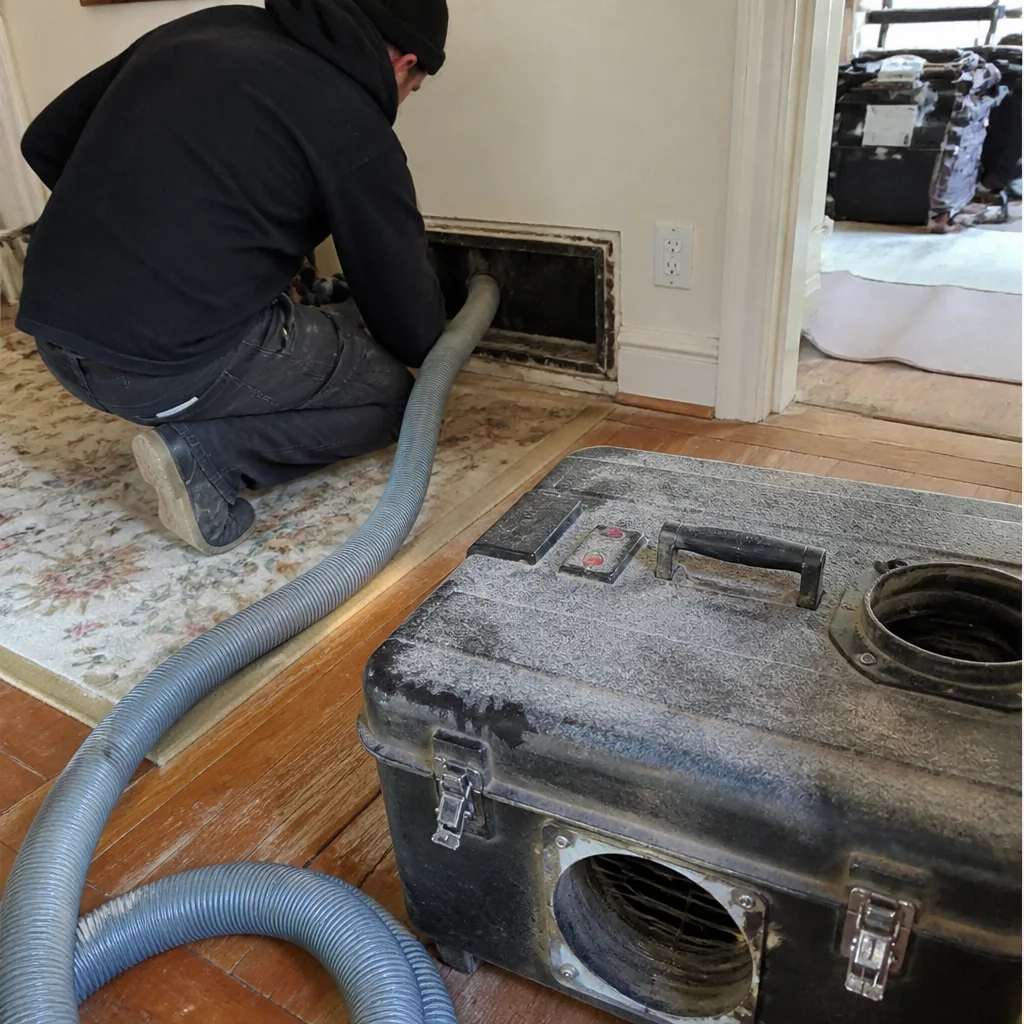 Before
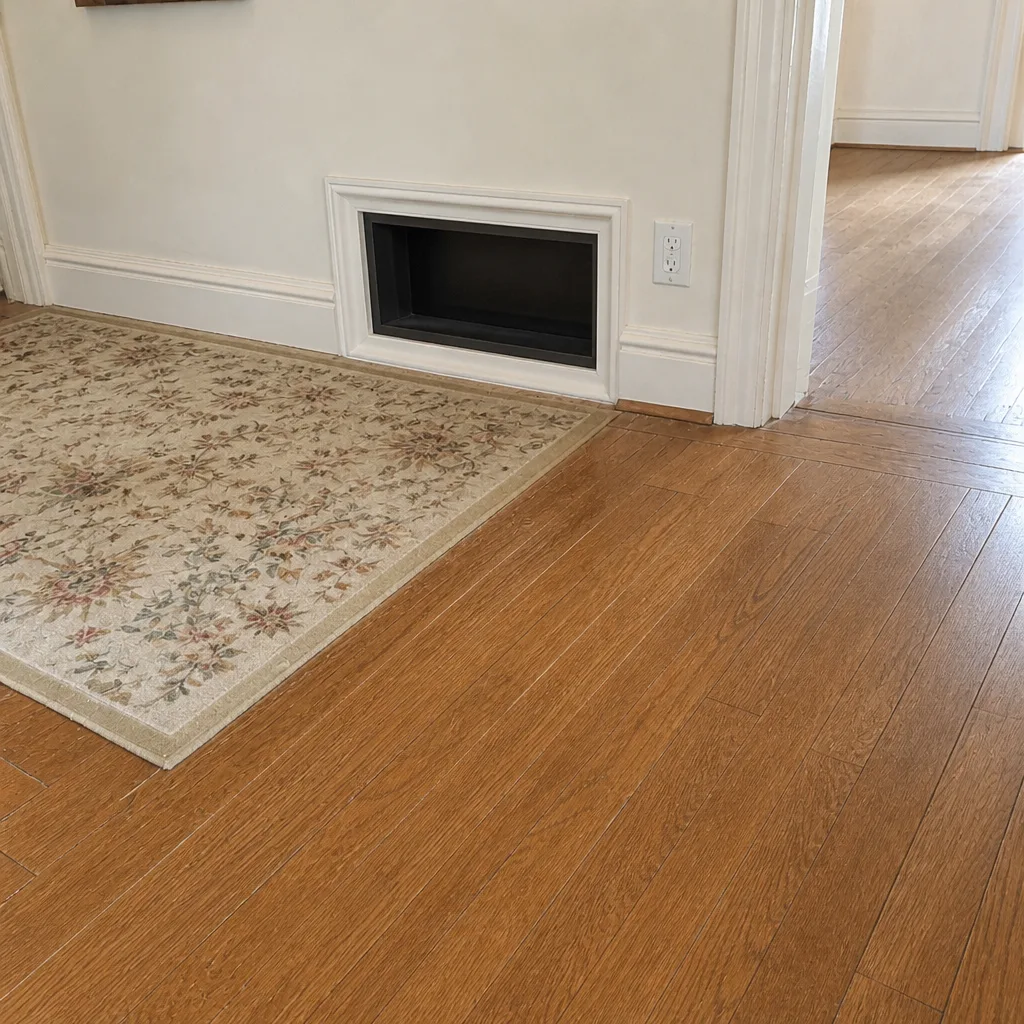 After
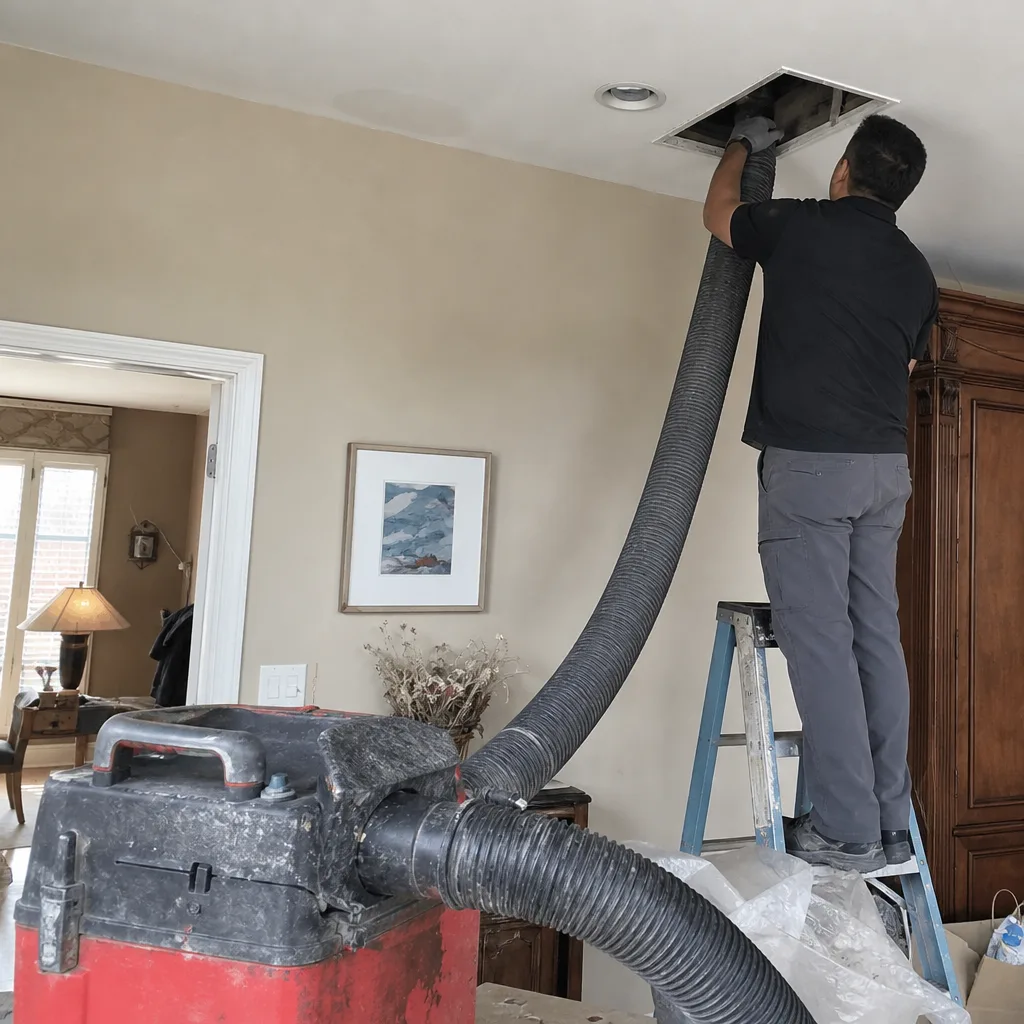 Before
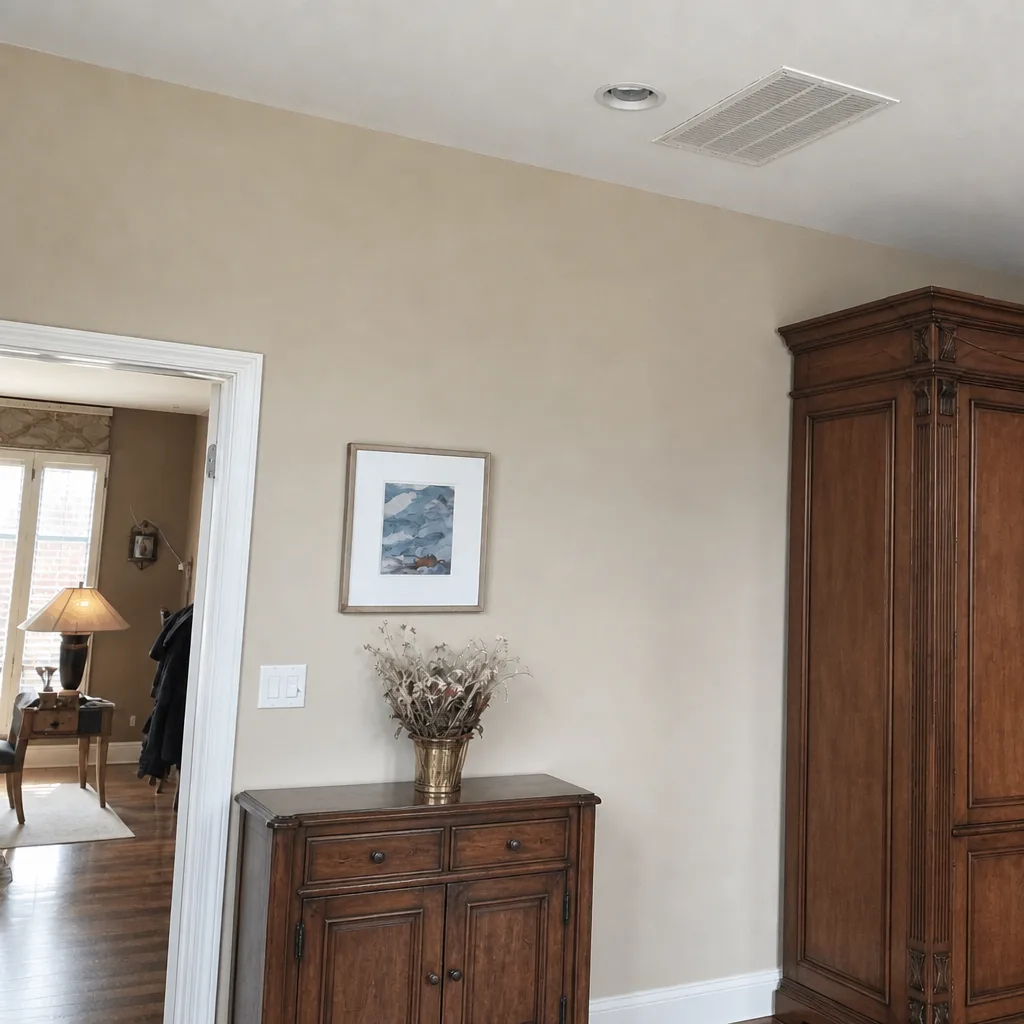 After
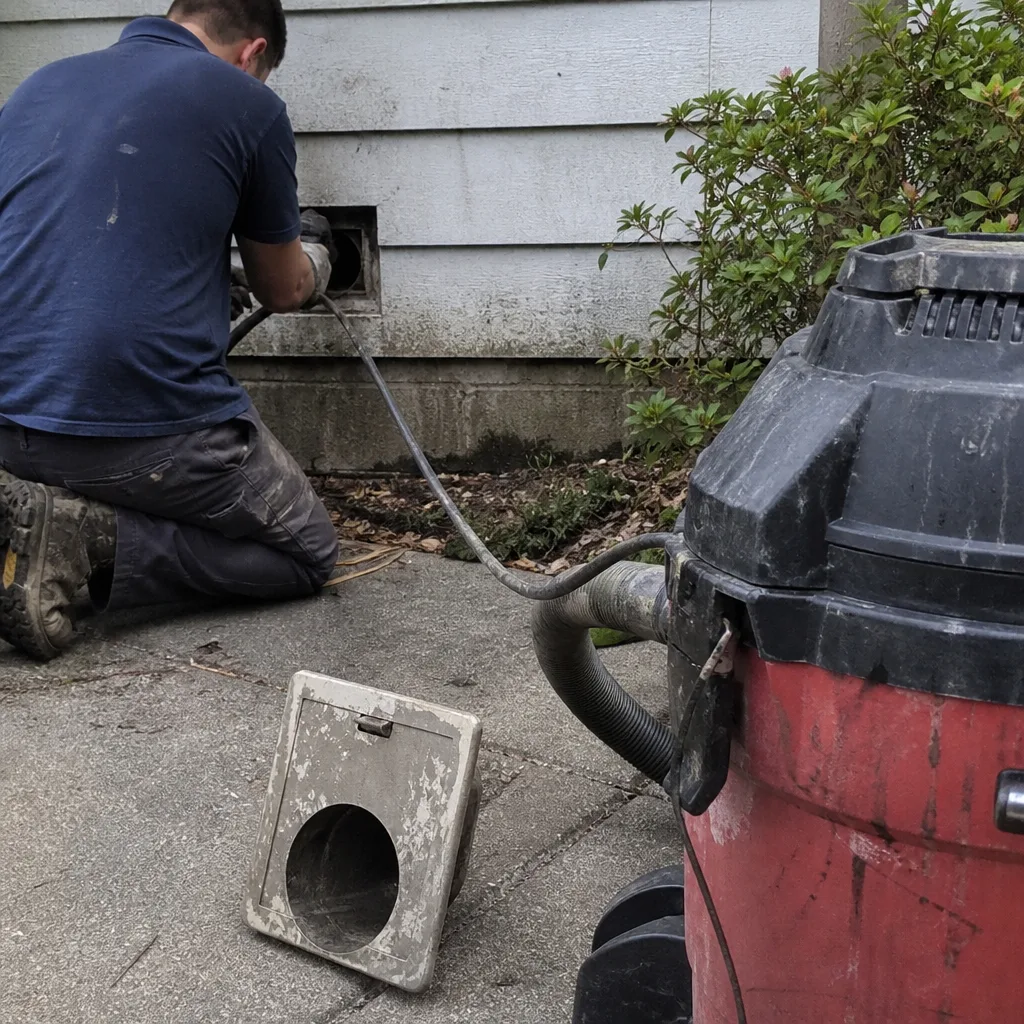 Before
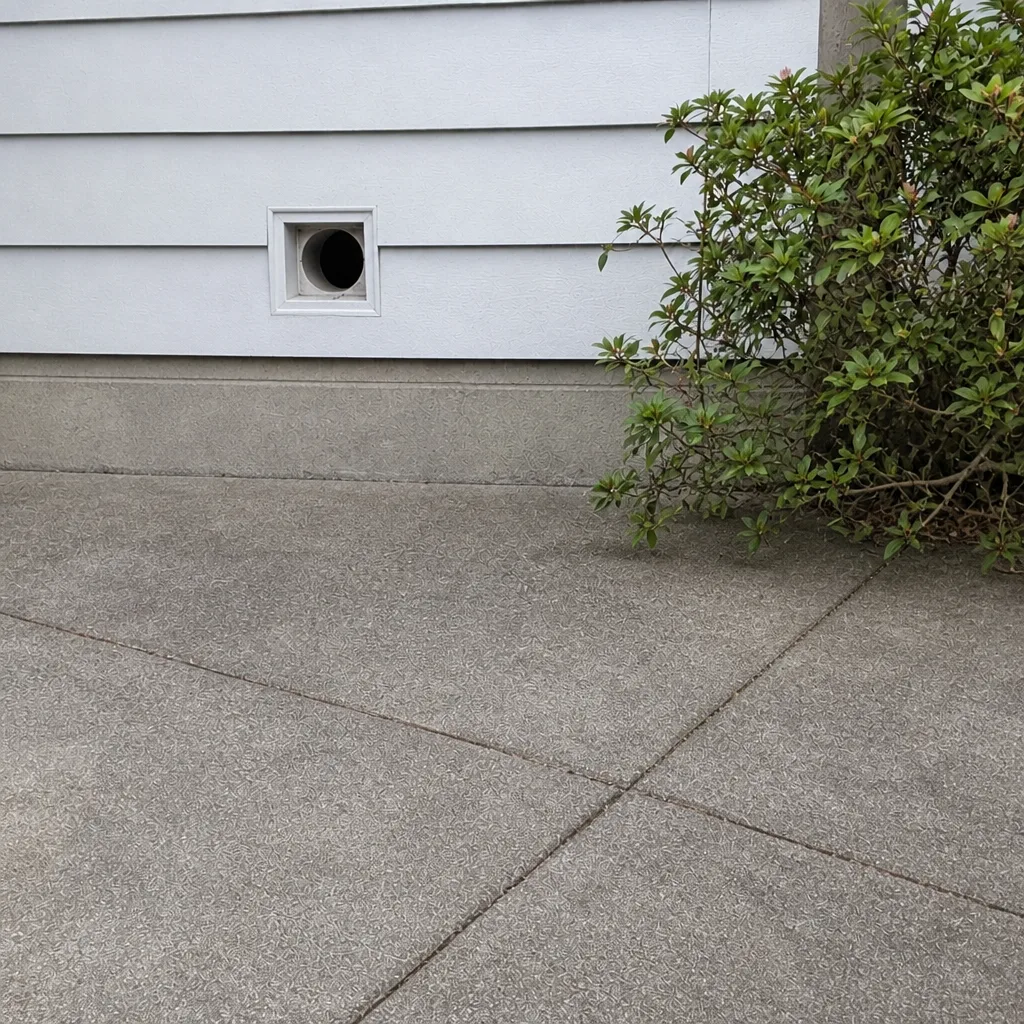 After
When to Call a Professional
Some duct work falls into the “watch it” category and some doesn’t. If you can see a collapsed flex run in a crawlspace, if a room has stopped getting airflow, if your dryer vent is taking a full cycle to do what it used to do in half the time, or if you’ve recently had a water loss or pest issue that could have affected duct interior conditions, that’s a call worth making. The same goes if you’re planning a sale and don’t know whether past duct repairs were permitted. If the work is genuinely just cleaning, a professional with commercial-grade equipment will do more in a single visit than any consumer-grade approach, and if repair is needed, you want a company that can identify it before it becomes a problem.
Duct Cleaning Santa Rosa offers free estimates in Santa Rosa. Call (855) 929-1609. Estimates are free, the price is set per job by the written estimate, and we’ll tell you clearly whether the work you’re considering is cleaning or repair.
Frequently Asked Questions
No. Routine air duct cleaning in Santa Rosa does not require a permit because it’s classified as maintenance rather than mechanical work. Repair, replacement, or modification of duct components is different and may require a permit from the City of Santa Rosa. Call (855) 929-1609 if you’re unsure which category your job falls into, because the answer changes everything downstream.
Cleaning removes debris from a duct system that’s already installed and functioning. Repair changes the physical system by altering connections, sealing, components, or configuration. Under the California Mechanical Code, the first is maintenance and the second is mechanical work that may require a permit and a C-20 licensed contractor. Call (855) 929-1609 for a free estimate that spells out which one your job is.
Often, yes. When ducts are sealed or replaced under a permit, Title 24 typically requires verification that the duct system meets the leakage threshold for your climate zone and project type. That verification is usually performed by a HERS rater. The specific threshold depends on the project, so ask the City of Santa Rosa building department what applies to yours. For a free estimate on duct work in Santa Rosa, call (855) 929-1609.
A C-20 Warm-Air Heating, Ventilating and Air-Conditioning license issued by the Contractors State License Board. Cleaning alone does not require this license; repair does. Verify any contractor’s license number on the CSLB website before work begins. Call (855) 929-1609 to schedule a free estimate on duct work that may involve repair.
An inspection answers that question. Visible symptoms like uneven airflow between rooms, dust streaking at registers, or a rising energy bill point toward possible repair, while a system that’s simply overdue for cleaning usually shows accumulated debris without structural problems. A professional inspection identifies which it is before you commit to work. Call (855) 929-1609 and we’ll tell you straight.
Cheap quotes usually reflect less equipment, narrower scope, or a per-vent pricing model that doesn’t account for what’s actually in the system. A quote built around commercial-grade equipment, whole-system cleaning, and a clear distinction between cleaning and repair costs more because it involves more. The written estimate is what sets the final price, and it should describe what’s actually being done. Call (855) 929-1609 for a free estimate that does.
The Bottom Line
Cleaning your ducts in Santa Rosa is maintenance and doesn’t require a permit. Repairing them is mechanical work under the California Mechanical Code and Title 24, and it may require a permit, a C-20 licensed contractor, and duct leakage testing documented in the permit file. The moment a “cleaning” visit turns into sealing a disconnected run, replacing a plenum, or modifying any duct component, the rules change. Get the distinction in writing. Verify the license. Request the documentation package at the end. Keep it for as long as you own the home. Santa Rosa’s permitting environment, shaped by the post-fire rebuild, makes that paper trail more valuable than it would be in most cities. Call (855) 929-1609 for a free estimate. We answer 24/7. Fast dispatch from 7am to 7pm, Sunday through Friday.
Written by the team at Duct Cleaning Santa Rosa.