
Last updated November 15, 2026
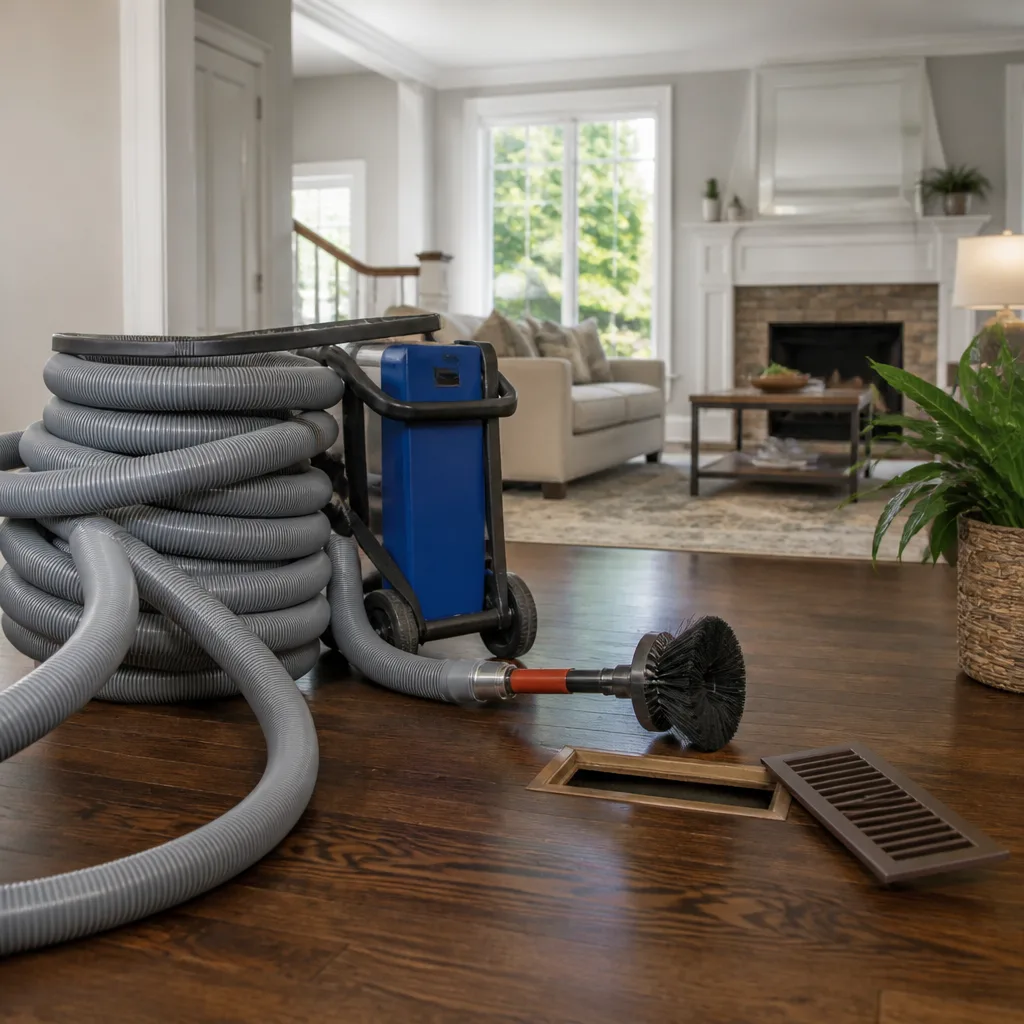 Whole-home duct cleaning
 Dryer vent cleaning
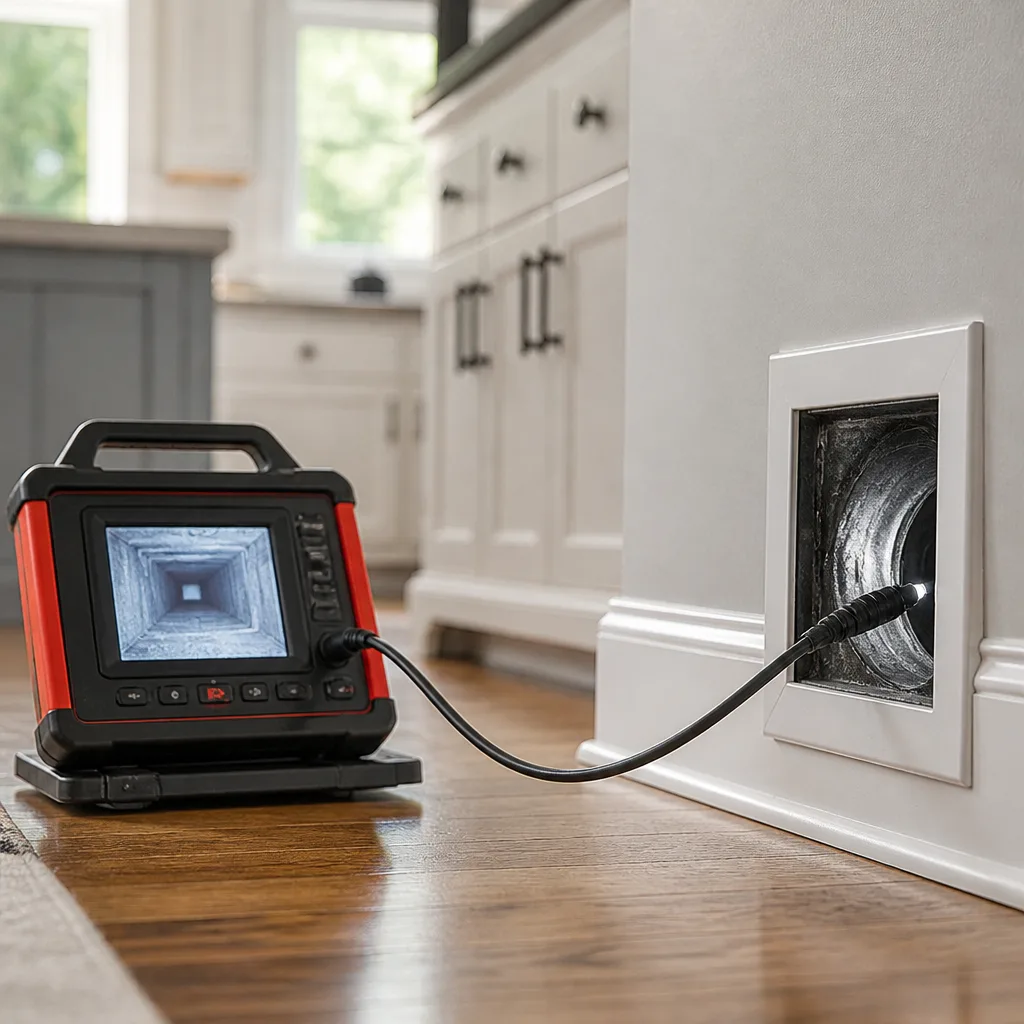 Camera inspection
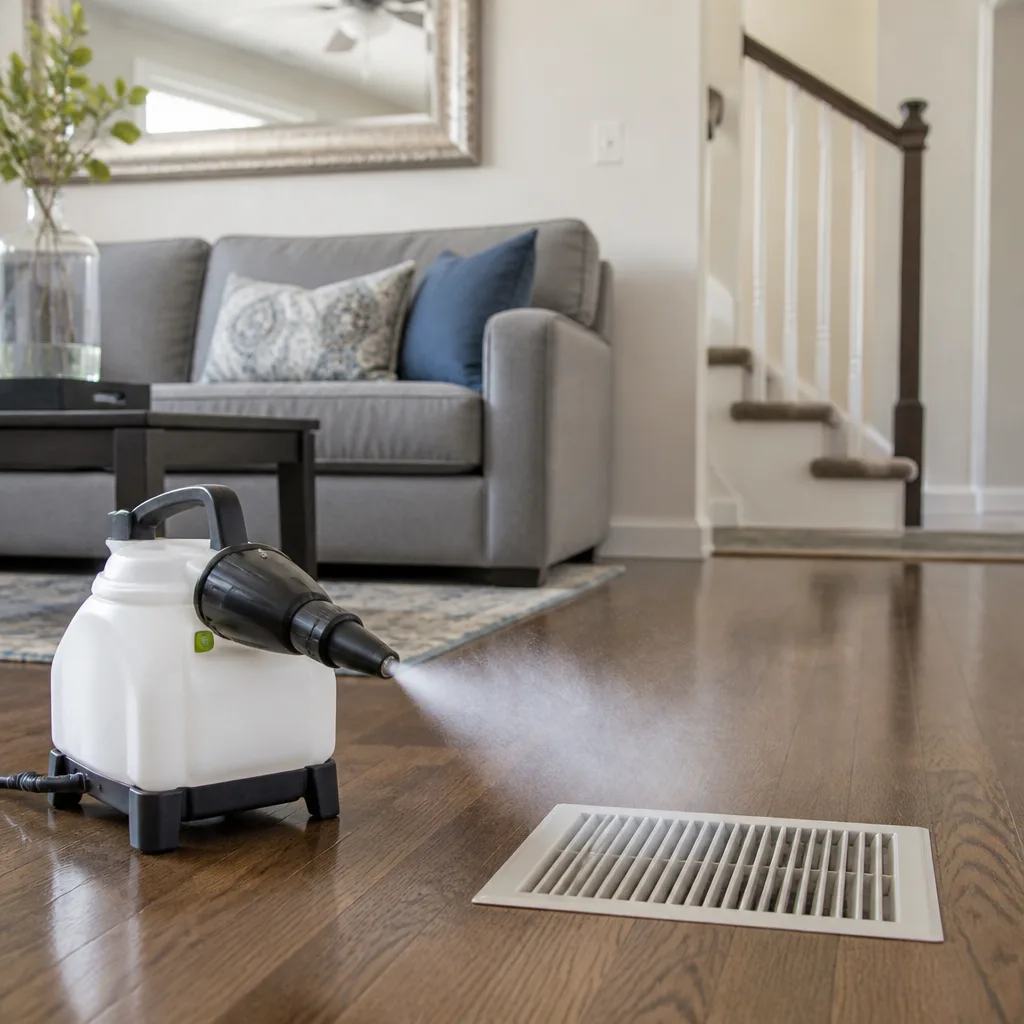 Sanitizing & deodorizing
Whole-system duct and dryer vent check with before-and-after photos - you see exactly what came out of your vents
That "$99 whole-house special" is a bait ad - the real number appears once they are in your hallway, or the "clean" is a shop-vac at the register. We photograph the inside of your ducts before and after instead.
The Complete Guide to Air Duct Cleaning in Santa Rosa
Most homeowners assume dirty ducts announce themselves through visible dust or a musty smell. In Santa Rosa, that assumption fails quietly. The debris that builds up in a forced-air system here often settles into fiberglass liner and flex duct joints without ever leaving a mark on the register cover, which is why a house can look clean while the air handler pulls dust, ash, and insulation fibers through every room. This guide maps out what’s actually inside a Sonoma County duct system, how the local housing stock and wildfire history shape the problem, and how to tell real source-removal cleaning apart from a vacuum job that only touches the surface.
Quick Answer
Air duct cleaning in Santa Rosa means removing accumulated dust, wildfire ash, and construction debris from the supply and return runs of a forced-air system using negative-pressure containment and contact cleaning, not just vacuuming the registers. A proper job uses commercial-grade equipment like Rotobrush brush systems and Nikro HEPA units to pull material out of the ducts while Abatement Technologies negative-air machines keep contaminants from recirculating into your living space. If your Santa Rosa home has flex duct, fiberglass board, or sheet metal runs from the 1960s through the 1990s, the method matters as much as the cleaning itself.
Styles & brands we work with
- Whole-home duct cleaning
- Dryer vent cleaning
- Camera inspection
- Sanitizing & deodorizing
Table of Contents
- Why Santa Rosa Ducts Are Different
- The Anatomy of a Sonoma County Duct System
- What Professional Equipment Actually Does
- Source Removal vs. Surface Cleaning
- When Cleaning Isn’t Enough: Repair and Inspection
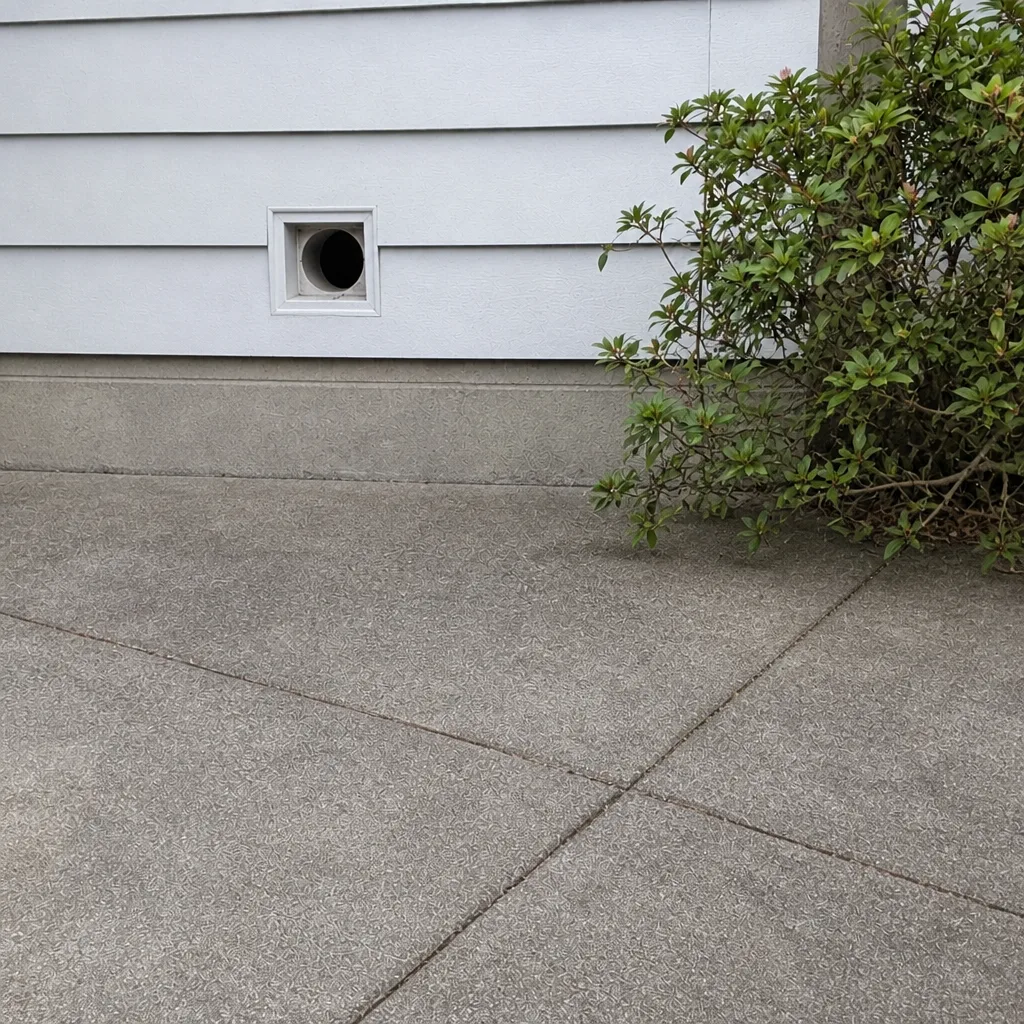
- Dryer Vents: The Fire Risk Most Duct Cleaners Skip
- How to Verify the Work Was Done
- Common Mistakes to Avoid
Why Santa Rosa Ducts Are Different
National duct cleaning advice usually assumes one of two things: a house in a snowy climate with a sealed envelope and modern construction, or a humid southern home fighting biological growth. Santa Rosa sits in neither category. The local climate is mild, with cool wet winters and warm dry summers, and the housing stock leans heavily on construction from the 1960s through the 1990s. That combination produces a duct environment that generic content doesn’t address.
The first difference is wildfire residue. After the 2017 Tubbs Fire, air quality researchers found fine particulate matter embedded in duct liners up to 18 months after the event, including in homes that never lost power and were never directly threatened by flame. Homes that stayed standing still drew smoke and ash through return grilles and outdoor air intakes for weeks. That residue doesn’t behave like ordinary household dust. It’s finer, it clings to fiberglass liner more aggressively, and it can carry combustion byproducts that a simple vacuum pass won’t dislodge.
The second difference is humidity swing. Santa Rosa’s wet winters push moisture through unconditioned spaces like attics and crawlspaces, and its dry summers pull it back out. Duct systems that aren’t perfectly sealed absorb that cycle, and fiberglass board liner in particular can trap moisture during the wet months and release it in summer. That doesn’t guarantee mold, but it means duct interiors here are more likely to hold onto deposits than ducts in a stable, dry climate.
The third is housing age. A large percentage of Santa Rosa homes were built during a stretch when flex duct and fiberglass duct board were standard. Those materials are more fragile than sheet metal and respond very differently to cleaning. A brush that’s safe on sheet metal can shred flex duct if the technician doesn’t know what they’re working with. Knowing the material before you start is half the job.
The Anatomy of a Sonoma County Duct System
Before any cleaning happens, a technician should know what they’re working inside. In Santa Rosa, that usually means a mix of three materials running through the same house. Each one behaves differently, and each demands a different cleaning approach.
Flex duct
Flex duct is the corrugated, flexible line you’ll find snaking through attics and crawlspaces in homes built from the 1970s onward. It’s cheap to install and efficient when it’s intact, but it’s also the most fragile part of a typical Santa Rosa system. The inner liner is thin, the wire coil can crush, and debris tends to collect at the low spots where the duct sags. Cleaning flex duct requires lower brush speeds and care to avoid damaging the liner, because a torn liner turns a cleaning job into a repair job.
Fiberglass duct board
Fiberglass duct board was common in Santa Rosa construction through the 1980s and 1990s, particularly in trunk lines and plenum connections. It’s rigid but porous on the interior surface, which means fine ash and dust work their way into the fibers rather than sitting on top. Cleaning fiberglass board is a judgment call. Light surface deposits come off with contact cleaning; deeply embedded material may mean the board needs to be replaced rather than scrubbed, because aggressive cleaning damages the surface and reduces the duct’s insulation value.
Sheet metal
Older Santa Rosa homes and most commercial spaces use galvanized sheet metal, often with interior insulation wrap. Sheet metal is the most forgiving material to clean because it can take a full contact brush without damage. It’s also where you’ll see the most dramatic before-and-after difference, since ash and dust clearly accumulate along the seams and corners of each run.
Most Santa Rosa homes have all three materials in the same system. That’s why the cleaning method needs to be tailored to the specific duct, not applied uniformly across the house.
What Professional Equipment Actually Does
The gap between a professional duct cleaning and a shop-vac job isn’t just about suction power. It’s about three things working together: contact agitation, HEPA filtration, and negative-pressure containment. Miss any one of those and the debris either stays in the duct or ends up in your living room.
Rotobrush contact cleaning
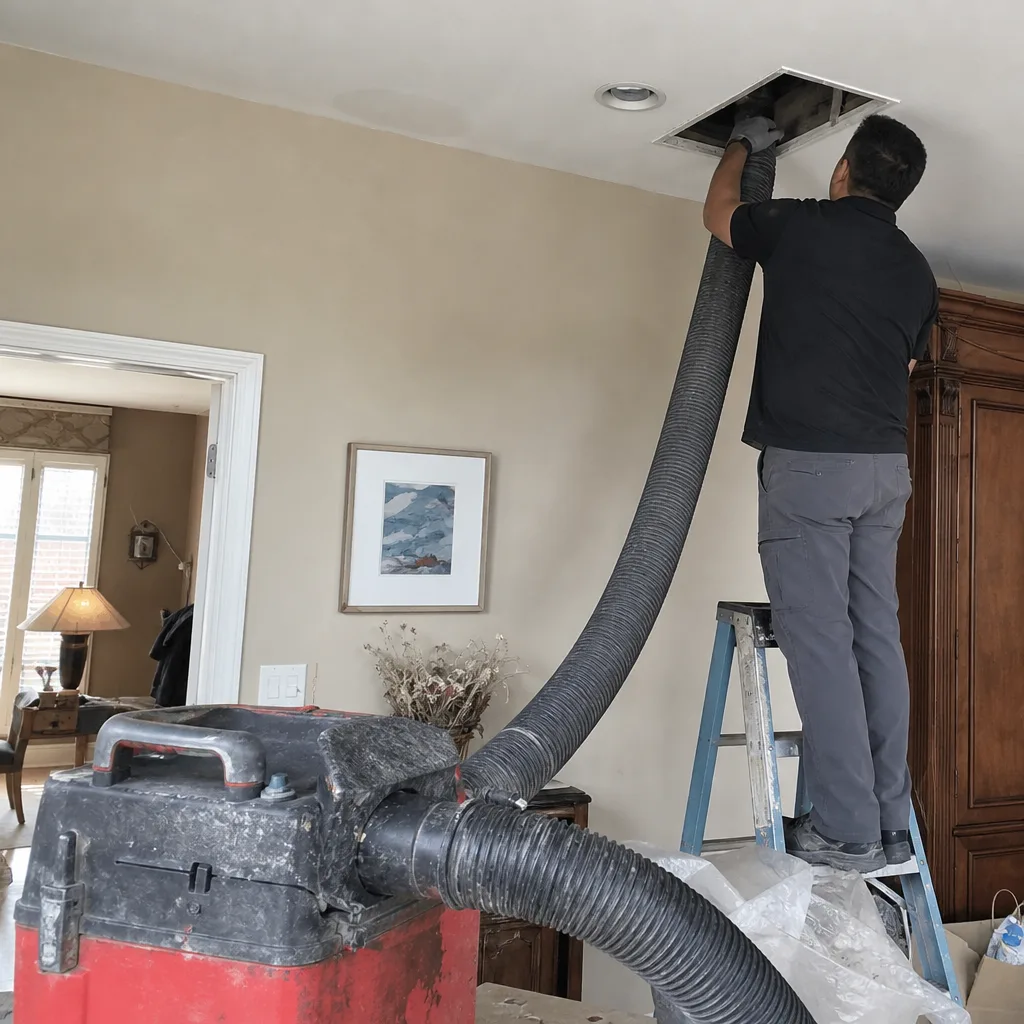
A Rotobrush system is a rotating brush head attached to a flexible whip that’s fed through the duct from the register or plenum. As it moves through the run, the brush physically knocks material off the duct walls and drives it toward the collection point. This is the part a shop vac can’t do. Suction alone can’t dislodge debris that’s adhered to fiberglass liner or packed into the corners of a sheet metal trunk. The brush has to break it loose first.
Nikro HEPA filtration
The Nikro HEPA unit is the capture side of the operation. It’s connected to the duct system as the vacuum source and filters the airstream down to HEPA-rated standards before returning it. This matters in Santa Rosa specifically because wildfire residue includes fine particulate that a standard vacuum filter will pass straight through. Without HEPA-rated capture, a cleaning job can actually redistribute fine ash into the home’s air during the process.
Abatement Technologies negative-air containment
Abatement Technologies negative-air machines are the tool that separates remediation-grade work from ordinary cleaning. These units maintain the duct system under negative pressure during the cleaning, so any dust or debris that gets dislodged is pulled toward the collection unit rather than pushed into the room. In homes that experienced wildfire smoke intrusion, or where there’s any question of biological growth inside the duct, this is the standard of care. The equipment does the work, and it’s the equipment that determines whether the debris leaves the house or just relocates.
Alongside the machines, professional use of Guardsman protective products signals attention to surfaces and materials during service. Duct cleaning pulls equipment through living space, past walls, floors, and furnishings. Protecting those surfaces isn’t the headline, but it’s the difference between a careful job and a blast-and-go one.
Source Removal vs. Surface Cleaning
Source removal and surface cleaning sound similar and cost similar amounts if you’re only reading the invoice. They are not the same job. Understanding the difference is the single most useful thing a Santa Rosa homeowner can learn before hiring anyone.
What surface cleaning actually is
Surface cleaning means vacuuming what’s reachable from the register openings and wiping down the visible interiors. On a system with light dust, that’s genuinely sufficient. But surface cleaning does nothing for the material adhered to duct walls further down the run, debris collected at elbows and transitions, or ash embedded in fiberglass liner. It also skips the air handler and blower assembly, which is often where the heaviest accumulation sits.
What source removal actually is
Source removal means the debris is physically dislodged from every surface of the system and captured under containment. That includes:
- Opening and cleaning every supply and return run, not just the accessible ones.
- Running contact agitation from the register or plenum to the trunk.
- Cleaning the trunk lines, plenum connections, and air handler cabinet interior.
- Cleaning the blower wheel and evaporator coil area where accessible.
- Maintaining negative pressure throughout so nothing recirculates.
- Verifying with before-and-after photos of the customer’s actual ducts.
On a Santa Rosa system that’s seen wildfire smoke, only source removal actually addresses the contamination. Surface cleaning makes the register covers look better; source removal changes what’s in the air.
When Cleaning Isn’t Enough: Repair and Inspection
Some duct problems can’t be cleaned away. A disconnected run, a crushed flex line, or a failed liner will keep pulling debris and conditioned air out of the system no matter how thoroughly the ducts are cleaned. In our experience, a meaningful share of Santa Rosa cleaning jobs turn into structural conversations once the ducts are opened up. That’s a repair question, not a cleaning one.
Signs your ducts need repair, not just cleaning
- Rising energy bills without any change in usage habits.
- Rooms that never hold temperature, or rooms that feel pressurised when the system runs.
- Visible dust plumes at registers immediately after cleaning.
- Moisture staining or liner delamination inside duct interiors.
- Flex duct that’s collapsed, crushed, or disconnected from the trunk.
- Musty odor that returns within weeks of a cleaning.
Air duct repair as a standalone service matters because a cleaner without repair capability will clean up to the failure and stop. That leaves the actual source of the problem in place. Our approach is to diagnose during the cleaning, flag any compromised runs, and either repair them or quote them in writing before finishing the job. Clean ducts and repaired ducts is the standard, not clean ducts with a note about the ones that need attention.
For issues like liner damage or disconnected runs, indoor air quality systems like Aprilaire and Honeywell components can integrate at the time of service. That’s the bridge between duct cleaning and better air quality at home, and it’s usually easier to add when the system is already open than as a separate visit. If duct work is on your mind and you’re in Santa Rosa, it’s worth asking about the full scope before booking.
Dryer Vents: The Fire Risk Most Duct Cleaners Skip
If you had to name the single most overlooked part of your forced-air system, it’s the dryer vent. Most duct cleaning companies either skip it entirely or subcontract it out. That’s a problem, because dryer vent lint is a leading cause of residential structure fires, and a clogged vent is one of the most preventable household hazards in Santa Rosa.
Lint accumulates in dryer vent lines faster than most homeowners realize, particularly in homes with long vent runs routed through attics or walls. Every load of laundry pushes lint past the lint screen and into the duct. Over time that lint cakes onto the interior walls, narrowing the vent and reducing airflow, which raises dryer temperature and shortens dry times. The fire risk is real, and it’s why dryer vent cleaning belongs in the same service visit as duct cleaning.
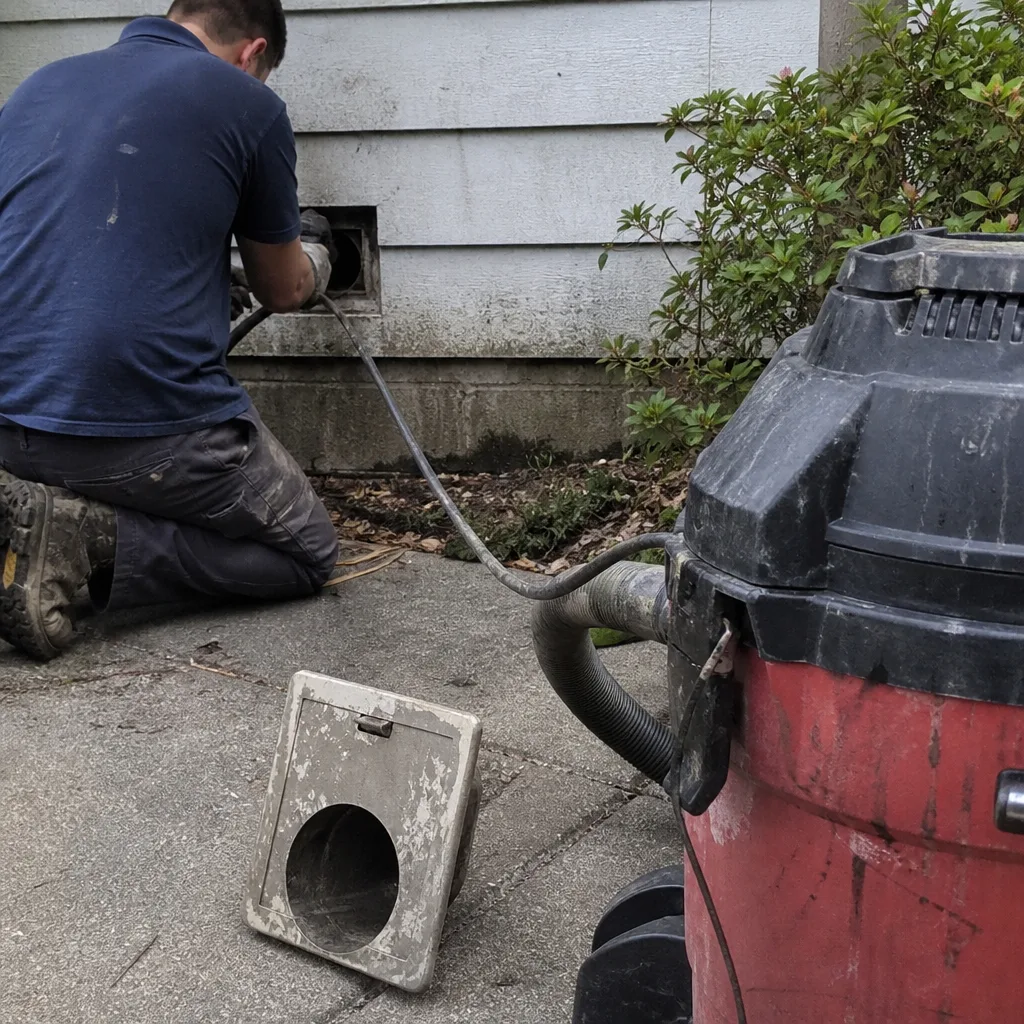
The cleaning process itself is straightforward and uses the same negative-pressure and contact methods applied to HVAC ducts. Ask any company you hire whether dryer vent cleaning is in scope. If it isn’t, you’re either going to need a second call or you’ll keep living with the risk.
How to Verify the Work Was Done
The industry’s reputation problem is real. A low quoted price that balloons into a much larger invoice once the technician is on site, or a cleaning that was claimed but never actually performed, is what most homeowners fear. The defense is straightforward: insist on before-and-after photos of your own ducts, and insist on a flat price per system that’s agreed before work starts.
What to ask before hiring anyone in Santa Rosa
- Which equipment will be used? Named systems like Rotobrush, Nikro, or Abatement Technologies are a sign of professional scope. “High-powered vacuum” is not an answer.
- Is the price per system or per vent? Per-vent pricing is how quotes inflate. A flat price per system, agreed in writing, is how they don’t.
- Will I see before-and-after photos of my own ducts? Not stock photos, not “representative” images. Your ducts.
- Is dryer vent cleaning included or separate? Ask explicitly.
- What happens if you find a repair during the cleaning? The answer should describe a written quote before any extra work, not a verbal “we’ll need to fix that too.”
- Is the work guaranteed? A satisfaction guarantee does more for you than a discount.
The right answer to all six questions is what a serious company should be able to give without hesitation. If any answer is vague, that’s your cue to keep looking.
Common Mistakes to Avoid
- Hiring on price alone. The cheapest quote in Santa Rosa is usually the one that becomes the most expensive invoice once the technician is on site. Ask about equipment and scope before you ask about price.
- Letting anyone clean flex duct with a sheet-metal brush. Flex duct tears easily. A company that doesn’t ask what material your ducts are made of before starting is a company that hasn’t thought about this.
- Accepting surface cleaning as the full job. If the technician only vacuums at the registers and never opens the plenum or cleans the air handler, you’ve paid for the parts of your system that were the least contaminated.
- Skipping dryer vent cleaning because the ducts look fine. Lint accumulation is inside the vent, not visible from the laundry room. It’s the most common fire risk in the system and the least likely thing to be flagged on its own.
- Believing “sanitising” spray replaces cleaning. Fogging a duct with a sanitizer does nothing for debris that’s still attached to the interior walls. Cleaning has to come first.
- Ignoring signs of disconnected runs. A supply line that’s come loose in the attic is blowing conditioned air into unconditioned space and pulling dust into the return. Cleaning won’t fix that. Repair does.
- Trusting a company that won’t document the work. If they can’t or won’t show you photos of your own ducts before and after, you have no way of knowing what actually happened.
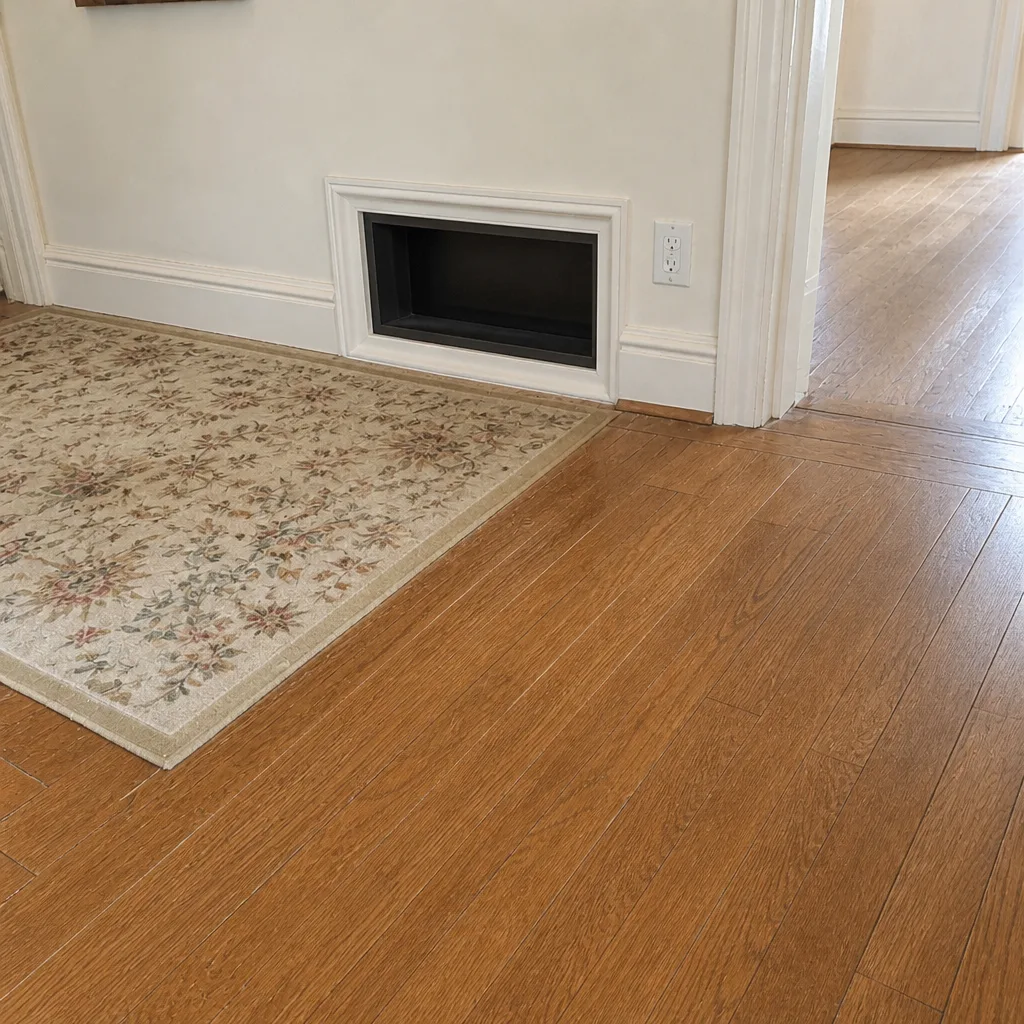
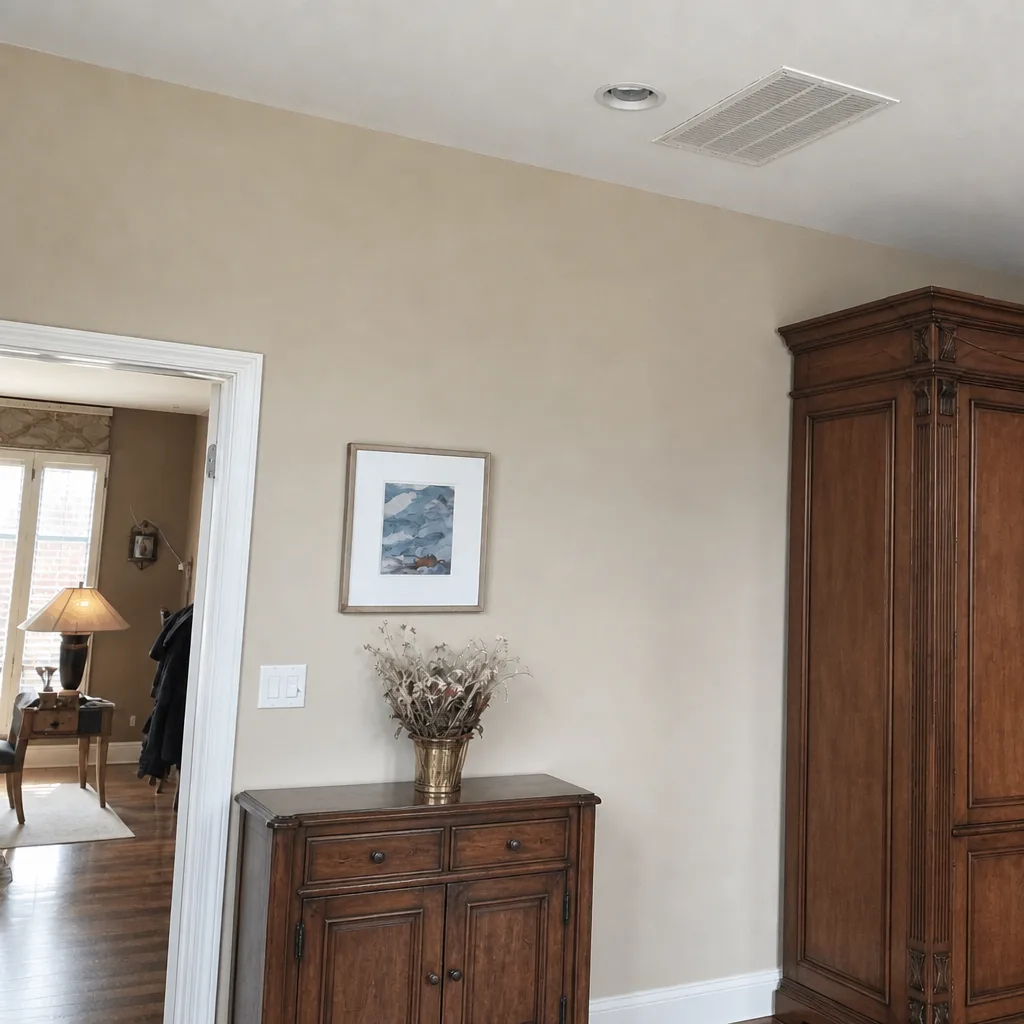
See the difference
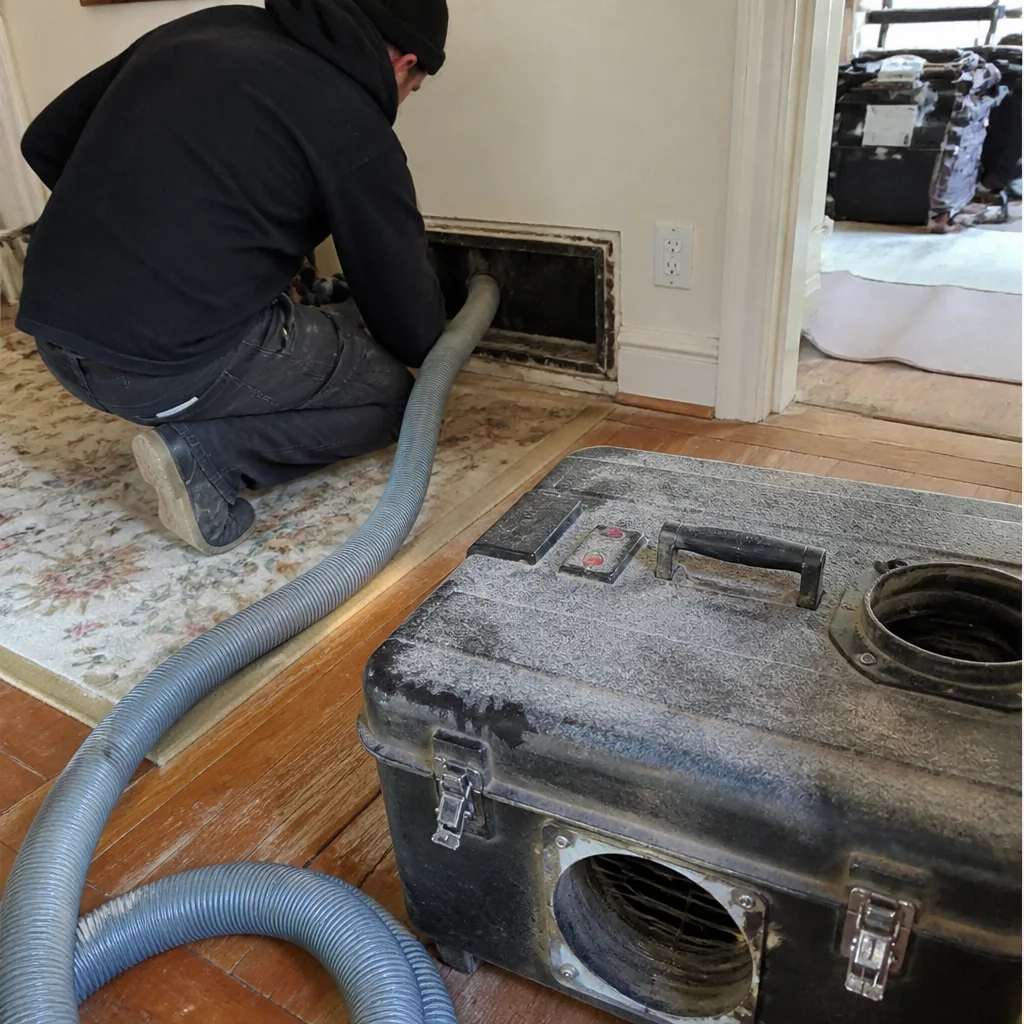 Before
 After
 Before
 After
 Before
 After
When to Call a Professional
Some duct work is genuinely routine, and some needs a technician. Call a professional if you’ve recently moved into a Santa Rosa home and don’t know when the ducts were last cleaned, if anyone in the household has asthma or allergies that seem to worsen indoors, or if you’ve noticed visible dust accumulation at registers shortly after cleaning. Call if your system has never been serviced and the home was built before the 1990s, since older fiberglass and flex duct needs inspection as much as cleaning. Call if you’ve had any smoke intrusion event, if dryer loads take longer than they used to, if any part of the house never holds temperature, or if you can see or smell something off in a register. Duct Cleaning Santa Rosa offers free estimates in Santa Rosa. Call (855) 929-1609. We answer 24/7. Fast dispatch from 7am to 7pm, Sunday through Friday.
Frequently Asked Questions
Residential air duct cleaning in Santa Rosa generally runs several hundred dollars for a full system, depending on the number of runs, the duct material, and whether repair or dryer vent cleaning is included. The written estimate sets the final price, and we work from one flat price per system rather than per-vent pricing. Call (855) 929-1609 for an exact quote; estimates are free.
Cheap quotes are usually per-vent surface cleaning that never opens the plenum, never runs contact agitation, and never touches the air handler. A company using a shop-vac rig can quote a very low number because they physically can’t do the source-removal work a Rotobrush and Abatement Technologies setup does. The price difference reflects scope, not efficiency. Call (855) 929-1609 for a scope-based quote.
Ask for before-and-after photos of your own ducts, not stock images. A serious company documents every job this way and gives you the photos as part of the service. We provide them as a matter of course. Call (855) 929-1609 to schedule an estimate.
Every three to five years is a reasonable interval for most Santa Rosa homes, but the honest answer is that it depends on your system and your history. Homes that experienced wildfire smoke intrusion, homes with pets, and homes with older fiberglass ducts often need attention sooner. Homes with recent duct replacements and well-sealed systems can go longer. Call (855) 929-1609 and we’ll give you an honest read on your specific system.
Yes. Wildfire residue is finer than ordinary household dust and clings to fiberglass liner more aggressively, which is why post-fire cleaning requires negative-pressure containment and HEPA-rated capture rather than ordinary vacuuming. Research after the 2017 Tubbs Fire found fine particulate matter embedded in duct liners up to 18 months later, including in homes that never lost power. If your home was near a fire event, a containment-based cleaning is the standard. Call (855) 929-1609 to talk through your situation.
It can if it’s done with the wrong equipment. Flex duct has a thin inner liner that a high-speed brush can tear. That’s why knowing the duct material before the job starts matters, and why we adjust brush speed and method based on what’s actually in the system. If a liner is already compromised, that’s a repair conversation. Call (855) 929-1609 for an inspection and estimate.
The Bottom Line
Santa Rosa duct systems carry debris that most cleaning advice doesn’t account for. Wildfire residue embedded in fiberglass liner, humidity swings that leave deposits in place, and older flex and fiberglass construction all mean the method matters more than the price on the invoice. Source removal with professional equipment, negative-pressure containment, before-and-after documentation, and one flat price per system are the four things that separate real cleaning from surface work. If your ducts haven’t been touched in years or your home went through a fire event, the right next step is an inspection, not a coupon. For air duct cleaning, dryer vent cleaning, or duct repair in Santa Rosa, call (855) 929-1609 for a free estimate. We answer 24/7. Fast dispatch from 7am to 7pm, Sunday through Friday.
Written by the team at Duct Cleaning Santa Rosa.