
Guardsman Air Duct Cleaning in Santa Rosa: A Homeowner’s Guide
Guardsman doesn’t clean air ducts. It’s a protection plan administrator, and when a Santa Rosa homeowner calls about duct cleaning under a Guardsman plan, the work gets referred to an independent contractor whose equipment and training can vary enormously from one zip code to the next. That single fact explains most of the confusion we hear about “Guardsman air duct cleaning” in Santa Rosa. The brand name shows up on furniture protection and warranty paperwork, not on a duct cleaning truck. Understanding what the plan actually covers, and what happens after a referral, is the difference between a job done well and a bill for work that underdelivered.
What Does a Guardsman Protection Plan Actually Cover?
Most Guardsman-style protection plans cover furniture, upholstery, carpet stains and accidental damage to household furnishings. They typically do not cover HVAC systems, ductwork or air quality equipment. If you call expecting duct cleaning to be a covered benefit, there’s a good chance you’ll be told the plan excludes it, or that any duct work is a separate paid referral with no guarantee attached.
That’s the source of a lot of frustration in Santa Rosa. The Guardsman name is familiar from furniture and fabric protection, so homeowners reasonably assume it extends to the ducts as part of the same “home protection” idea. It usually doesn’t. Before you schedule anything, read the coverage document and look for the exclusions list. Words like “HVAC,” “ductwork,” “mechanical systems” and “air handling” appearing under exclusions are your signal that duct cleaning isn’t part of the plan.
Some plans do offer a discounted referral or a preferred-vendor network. That’s not the same as coverage. A referral means someone will call you back and quote the work separately. The price, the equipment and the standard of care are entirely up to that third party.
Why Subcontracted Duct Cleaning Often Disappoints
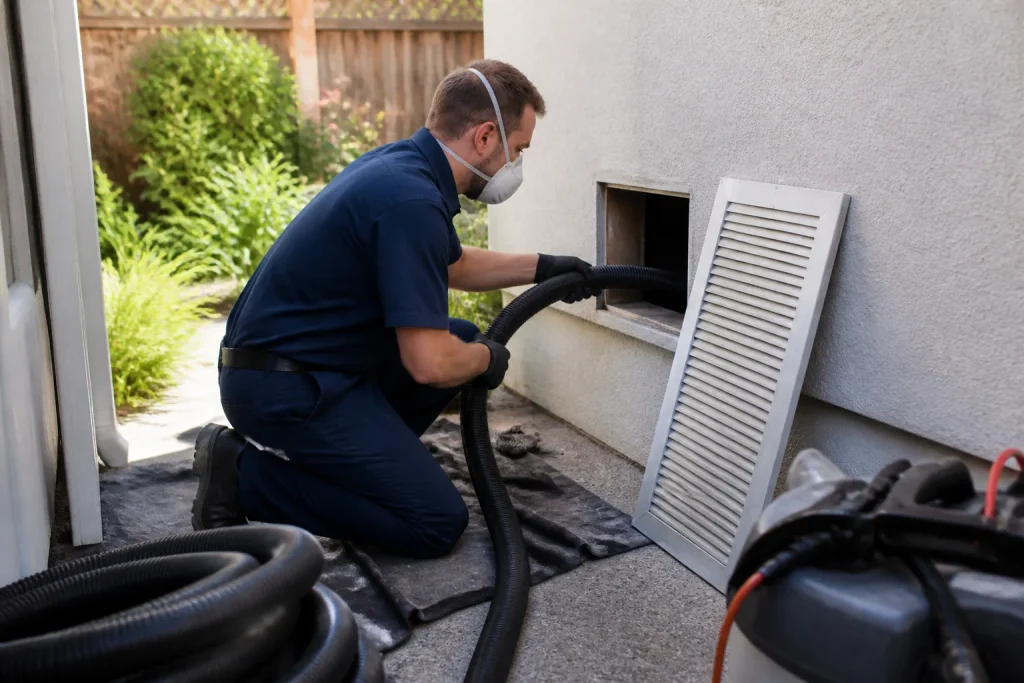
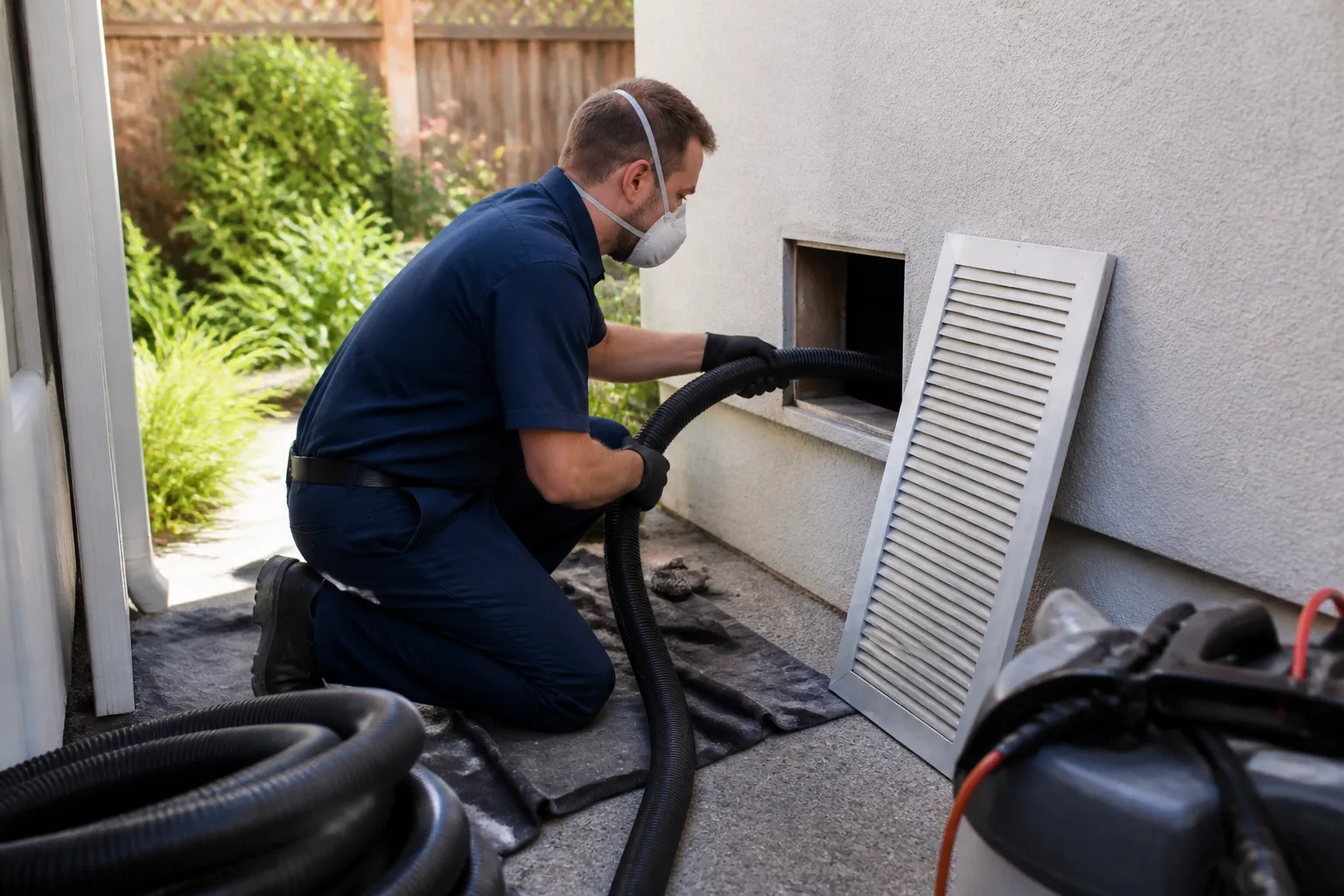
When a protection plan dispatches a subcontractor, that contractor is usually working on a thin margin set by the referral arrangement. The economics push toward getting in and out fast with the least equipment possible. In our experience, that means a portable shop-vac-style unit and a length of hose, not a contact-vacuum brush system that actually agitates debris off the duct walls.
Here’s what that looks like on a typical Santa Rosa job. The technician runs a hose into a few visible registers, pulls some loose dust, and leaves. The debris bonded to the inside of the ductwork, the kind that builds up on return-air runs and in the plenum near the air handler, stays exactly where it was. If the ducts also have disconnected joints, crushed flex runs or torn insulation, a cleaning-only crew won’t touch it. They clean around the problem.
That’s why we treat air duct cleaning and duct repair as two sides of the same job. Cleaning ducts that are structurally compromised is wasted work. You need to know whether the system is intact before anyone starts pulling air through it.
Questions to Ask Any Dispatched Contractor Before Work Begins
You have every right to ask these before a single tool comes off the truck. A contractor who knows what they’re doing will answer without hesitation. One who can’t is telling you something.
- What’s the make and model of your vacuum and agitation equipment? Professional-grade means contact-vacuum brush systems like Rotobrush, not a consumer vacuum with an adapter.
- Do you have a negative-air machine, and what’s its CFM rating? Negative air creates containment so dislodged debris goes into a HEPA filter instead of recirculating into your living room. Abatement Technologies negative-air units are the remediation-level standard. Nikro HEPA filtration captures the fine particulate. Ask for the numbers.
- Is the equipment truck-mounted or portable? Truck-mounted units typically move far more air volume and sustain suction across long runs. Portable units can work, but the CFM and hose length matter enormously. Bring the numbers to a specific comparison, not a vibe.
- How will you document before and after? Photos inside the registers, the plenum and the main trunk, taken with a scope or camera, are the only real proof the work happened. Ask to see them on completion, not later.
- What’s your process for sealing and protecting the home? Drop cloths, corner guards and protective surface products like the Guardsman line are a sign the crew treats your floors and trim as part of the job.
If the answers are vague, that’s your answer. You can decline the work.
Portable vs. Truck-Mounted Equipment: Why the Distinction Matters
Duct cleaning is fundamentally a debris-extraction problem. The question isn’t whether a machine is running; it’s whether it’s actually pulling the material out of the system and holding it. A small portable vacuum connected to one register at a time can only move so much air through a long duct run. On a typical Santa Rosa home with a long return trunk and multiple branch runs, that’s a real limitation.
Our approach is to combine contact agitation with sustained negative pressure. The Rotobrush system agitates dust off the duct surface, while a Nikro HEPA unit and an Abatement Technologies negative-air machine hold containment. The debris gets captured, not stirred up. When you’re cleaning ducts in a home where someone has allergies or asthma, that distinction is the whole point. The contaminants leave the system and stay out of the air.
Ask specifically whether the dispatched crew is using truck-mounted or portable equipment, what CFM the negative air unit is rated for, and whether the work will be documented with before-and-after photos. Professional-grade tools answer all three without a pause.
Dryer Vents and Air Quality: The Jobs Guardsman Doesn’t Touch
Most third-party duct cleaning referrals stop at the ducts. Two related jobs often don’t get addressed, and both matter for a Santa Rosa home.
The first is dryer vent cleaning. Lint accumulation in the dryer vent run is a leading cause of residential structure fires, and a duct cleaning crew that subcontracts under a protection plan will rarely include it. The second is air quality hardware. If the system needs a media filter cabinet, an Aprilaire or Honeywell filtration upgrade, or a fresh-air intake correction, a single-trick cleaning crew won’t be able to integrate it. We work with Honeywell and Aprilaire systems specifically because duct cleaning and whole-home air quality belong in the same conversation.
One thing worth saying plainly: if you’ve been chasing a “Guardsman” angle for months and getting nowhere, you’re not alone. The plan was never built to clean ducts. It’s easier to call a specialist directly and get a straight answer the first time.
What Recourse Do You Have If Subcontracted Work Is Incomplete?
If a dispatched contractor cleans your ducts and a week later you’re still seeing dust plumes at the registers, the recourse depends entirely on how well you documented the job from the start. Protect yourself before the work begins:
- Get the contractor’s name and any license or registration information in writing. A referral from a plan is not a contract with the plan. Your service agreement is with the contractor.
- Photograph the ducts before the crew arrives. Open a register, take a clear photo inside, and note the date. This is your baseline.
- Require a written before-and-after photo set at completion. Written into the invoice or work order, not promised verbally.
- Inspect at least three registers, the return plenum and the area around the air handler. Anything still coated in dust or debris after a “professional” cleaning is your evidence.
- File the complaint with the plan in writing, referencing the work order and the photo record. A plan will typically stand behind a referred contractor only to the extent the documentation supports it.
If the original crew left problems behind, we can assess what’s actually going on inside the system. When to call a pro: any time you’re seeing recurring dust, uneven airflow, or debris you can’t explain, the ducts need eyes on them, not a coupon.
Related services in Santa Rosa: if you’d like the full picture of what a proper Santa Rosa duct job should look like, our duct cleaning Santa Rosa page breaks down the process from inspection to documentation.
The Bottom Line
Guardsman is a protection plan administrator, not a duct cleaning company. If a Santa Rosa homeowner calls about duct cleaning under that plan, the work is typically referred to a third-party contractor whose equipment and standards are the real variable. Ask about equipment make and model, negative-air CFM, truck-mounted versus portable setup, and before-and-after documentation before you let anyone start. If the answers don’t hold up, walk away.
That’s where we come in. Duct Cleaning Santa Rosa handles the full scope: professional-grade Rotobrush, Nikro HEPA and Abatement Technologies equipment; air duct repair done right, not cleaned around; and dryer vent cleaning so the whole forced-air system is covered in one visit. If you’re in Santa Rosa and need help, Duct Cleaning Santa Rosa offers free estimates. Call (855) 929-1609. We answer 24/7, with fast dispatch from 7am to 7pm.
Frequently Asked Questions
No. Guardsman is a protection plan administrator, not a duct cleaning company. Any duct cleaning work under a plan is referred to an independent third-party contractor, and the quality of the job depends entirely on who gets dispatched to your area. If you want the work done by a specialist with professional-grade equipment, working directly with a duct cleaning company is the more reliable path.
Most Guardsman-style protection plans cover furniture, upholstery and fabric damage, not HVAC systems or ductwork. Duct cleaning usually falls outside the coverage scope and appears on the exclusions list. Check your coverage document for terms like “HVAC,” “ductwork” or “mechanical systems” under exclusions. If it’s excluded, a referral to a paid contractor is what you’re being offered, not a covered benefit.
Ask for the make and model of the vacuum and agitation equipment, the CFM rating of the negative-air machine, whether the equipment is truck-mounted or portable, and how they’ll document the work with before-and-after photos. Professional crews answer all four without hesitation. Vague answers mean you should decline. If you’d rather start with a specialist, call (855) 929-1609 for a free estimate.
Most homes don’t need annual cleaning. A typical interval is every three to five years, sooner if you’ve had a renovation, water intrusion or pest activity, or if you’re seeing visible dust at the registers. Santa Rosa’s mild climate and mix of older housing stock means duct condition varies widely from one home to the next. An inspection will tell you more about your specific system than any rule of thumb. Call (855) 929-1609 for a free estimate and a clear answer.
Written by the team at Duct Cleaning Santa Rosa.
Need Air Duct Cleaning Help?
Call Duct Cleaning Santa Rosa - licensed & insured, here with fast help in Santa Rosa.
(855) 929-1609